
The Rise of Multimodal AI: Enabling Seamless Interactions Across Different Data Forms and Platforms
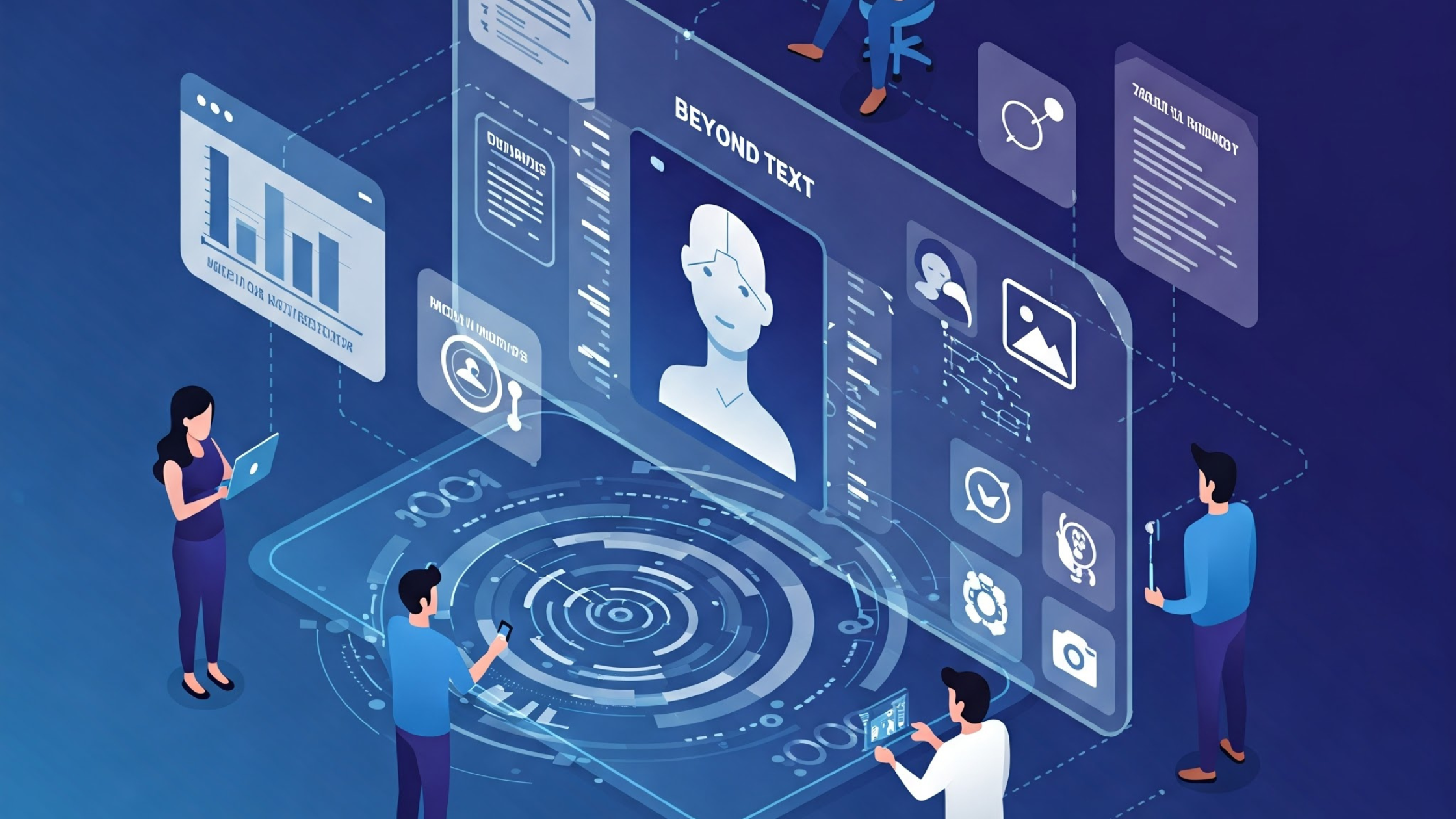
In recent years, artificial intelligence (AI) has made remarkable strides, evolving from narrow applications to more sophisticated systems capable of processing and understanding diverse forms of data. This evolution has given rise to multimodal AI, a paradigm that integrates multiple data modalities—such as text, images, audio, and video—into cohesive systems. By enabling seamless interactions across different data forms and platforms, multimodal AI is not only enhancing user experiences but also pushing the boundaries of what machines can achieve. This article delves into the essence of multimodal AI, its technical challenges, leading architectures, and its future potential in fields like robotics and human-computer interaction (HCI).
Understanding Multimodal AI: What is Multimodal AI?
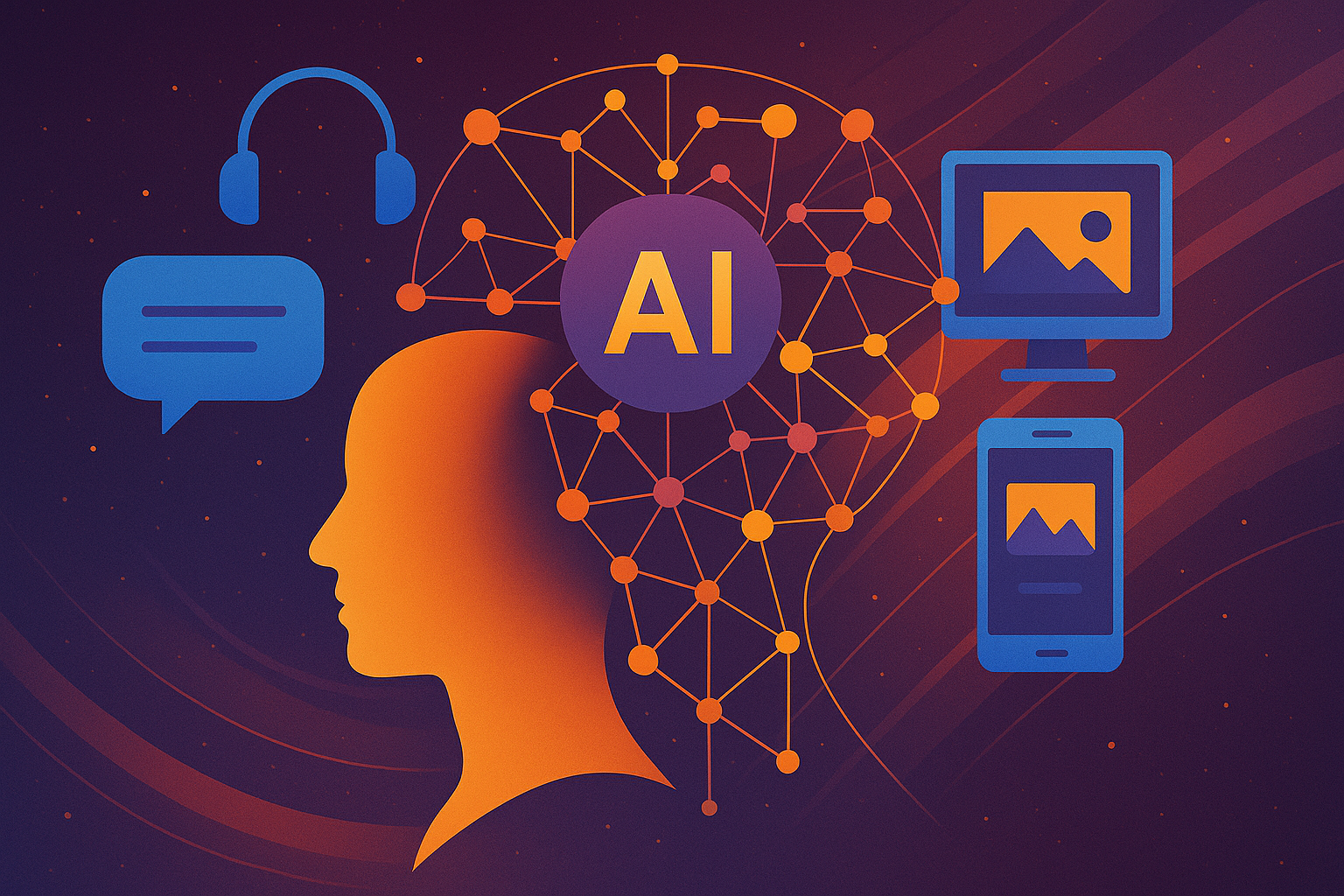
At its core, multimodal AI refers to systems that can process and interpret data from multiple modalities simultaneously. Traditional AI models typically focus on a single data type—like text or images—but multimodal AI combines these inputs to create richer, more nuanced outputs. For instance, a multimodal AI system might analyze a video while simultaneously interpreting the accompanying audio and textual descriptions, allowing it to generate comprehensive insights or predictions.
The ability to fuse different types of data not only enhances the accuracy of AI outputs but also allows for a more human-like understanding of context. This capability is particularly beneficial in applications such as virtual assistants, where a device must understand voice commands (audio), recognize user expressions (visual), and access relevant information (text) to provide meaningful responses.
Why Multimodal AI Matters
The importance of multimodal AI cannot be overstated. As our world becomes increasingly interconnected, the demand for systems that can seamlessly interact across various data forms is growing. This technology has implications for numerous sectors, including healthcare, education, entertainment, and customer service. For example, in healthcare, multimodal AI can analyze patient records (text), medical images (visual), and even biometric data (sensor-based) to deliver more accurate diagnoses and personalized treatment plans.
Moreover, multimodal AI holds the potential to bridge communication gaps by enabling machines to understand and respond to human emotions and intentions more effectively. This capability could revolutionize user experience design, making interactions with technology more intuitive and engaging.
Technical Challenges of Fusing Modalities: Complexity of Data Integration
One of the primary challenges in developing multimodal AI systems is the integration of diverse data types. Each modality has its unique characteristics, such as different data structures, formats, and noise levels. For instance, text is sequential and discrete, while images are spatial and continuous. Fusing these modalities requires sophisticated algorithms that can align and interpret the data in a meaningful way.
Researchers are exploring various approaches, including feature extraction, attention mechanisms, and joint embedding spaces, to address these challenges. However, achieving a balance between preserving the unique features of each modality while also creating a unified representation remains a significant hurdle.
Scalability and Computational Demand
Another challenge lies in the scalability of multimodal AI models. As the number of modalities increases, so does the complexity of the models. Training these systems demands substantial computational resources, which can be a barrier for many organizations. Efficiently scaling these models while maintaining performance is a critical area of ongoing research.
Furthermore, the need for large, labeled datasets that encompass multiple modalities complicates the training process. Collecting and annotating such data can be time-consuming and expensive, limiting the accessibility of multimodal AI technologies.
Leading Multimodal Architectures: CLIP: A Step Towards Unified Understanding
OpenAI’s Contrastive Language-Image Pretraining (CLIP) is a landmark architecture that demonstrates the potential of multimodal AI. CLIP learns to associate images with textual descriptions by training on a vast dataset of image-text pairs. This model can perform a variety of tasks, such as zero-shot classification and image generation, showcasing its flexibility and robustness.
The architecture employs a dual-encoder approach, where separate encoders process images and text, respectively. By leveraging contrastive learning, CLIP aligns the representations of both modalities in a shared space, enabling it to understand the relationship between them effectively. This innovative approach has set a new standard in multimodal learning, inspiring further research in the field.
DALL-E: Creativity Through Multimodality
Another notable architecture is DALL-E, also developed by OpenAI, which takes multimodal AI a step further by generating images from textual descriptions. By utilizing a transformer-based architecture, DALL-E can create highly detailed and contextually relevant images based on the input text. This capability opens up new avenues for creative applications, such as design, advertising, and content creation.
DALL-E’s success lies in its ability to understand and synthesize complex relationships between words and visual elements. This not only showcases the power of multimodal AI but also highlights its potential to augment human creativity, providing tools that can inspire and enhance artistic expression.
Future Potential in Robotics and Human-Computer Interaction: Advancements in Robotics
As multimodal AI continues to evolve, its applications in robotics are becoming increasingly promising. Robots equipped with multimodal capabilities can interpret visual cues, understand spoken commands, and even respond to emotional signals from humans. This advancement could lead to more intuitive and effective human-robot collaborations in various settings, from healthcare to manufacturing.
For instance, a robot designed for elder care could analyze a patient’s facial expressions, listen to their verbal requests, and access medical records to provide personalized assistance. The integration of multimodal AI into robotics could significantly enhance the quality of care and improve the overall user experience.
Enhancing Human-Computer Interaction
The future of human-computer interaction (HCI) is also poised for transformation through multimodal AI. By enabling systems to understand and respond to multiple forms of input, we can create more natural and engaging interfaces. Imagine a virtual assistant that can not only process voice commands but also interpret gestures and facial expressions, leading to a more fluid and interactive experience.
This shift towards multimodal HCI could redefine how we interact with technology, making it more accessible and user-friendly. As these systems become more sophisticated, the potential for personalized interactions that adapt to individual preferences and contexts will grow, paving the way for a new era of intelligent interfaces.
Conclusion
The rise of multimodal AI represents a significant leap forward in our ability to create intelligent systems that can understand and interact with the world in a more human-like manner. As we continue to overcome the technical challenges of fusing diverse data modalities, the potential applications in fields such as robotics and human-computer interaction are vast. The journey towards a future where machines can seamlessly integrate and interpret multiple forms of data is not just an exciting possibility; it is an imperative for the advancement of AI technology.
As we look ahead, the continued exploration of multimodal AI will undoubtedly lead to innovations that enhance our interactions with technology, making our lives more efficient, creative, and connected.