




The Future of AI Technology: Transforming Industries and Enhancing Human Experiences Worldwide
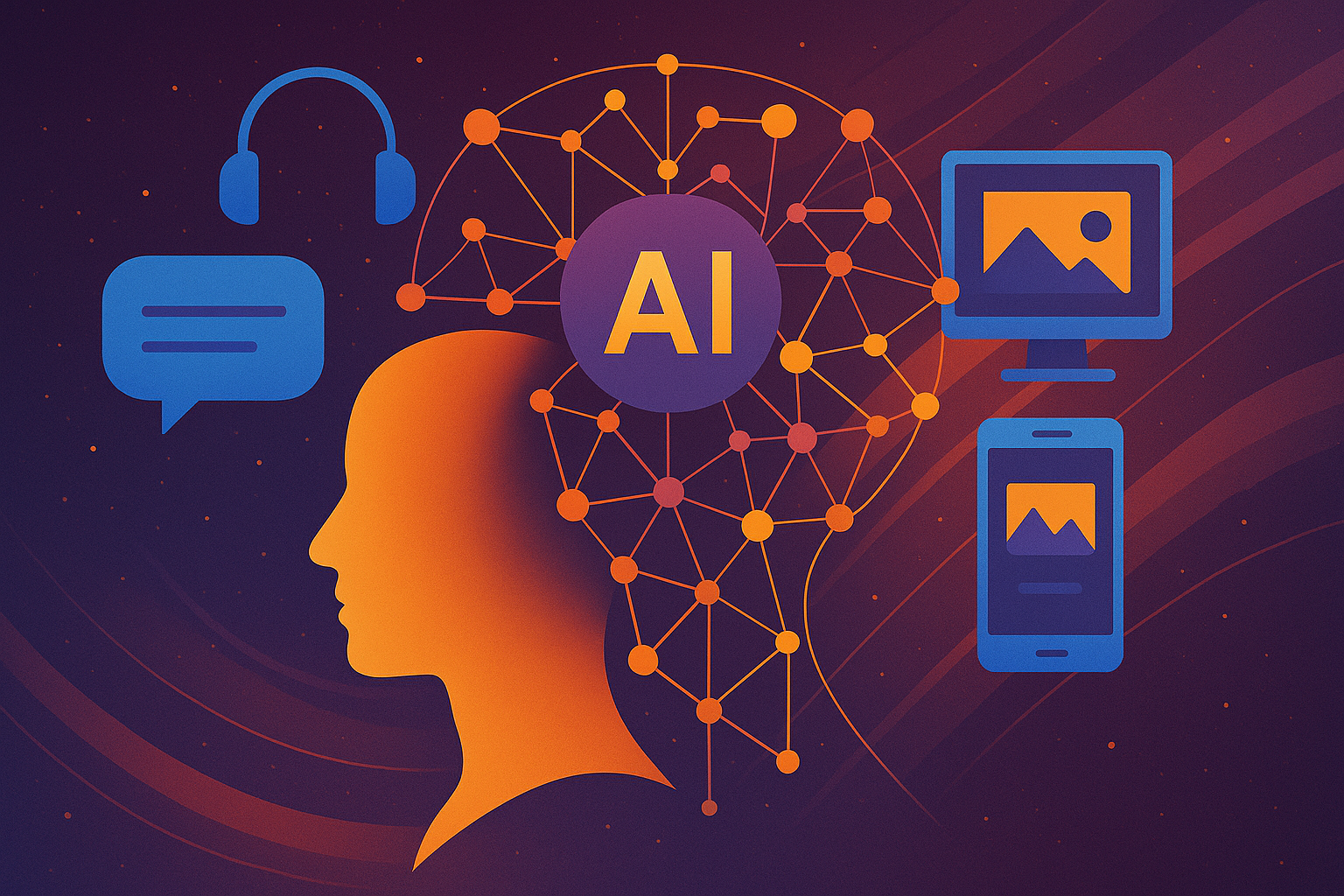
Artificial Intelligence (AI) is no longer a concept of the future; it is a dynamic force reshaping industries and enhancing our daily lives. From healthcare to finance, AI technologies are being integrated into various sectors, driving efficiency, innovation, and improved decision-making. As we delve into the future of AI technology, it is essential to explore its evolution, the role of big data, and the breakthroughs in reinforcement learning that promise to redefine human experiences.
The Evolution of Neural Networks: A Journey Through Time
Neural networks, inspired by the human brain’s architecture, have been pivotal in the advancement of AI technology. Initially, the concept of neural networks emerged in the 1940s, but it wasn’t until the 1980s that significant breakthroughs occurred. The introduction of backpropagation allowed for more complex networks to be trained effectively, leading to improvements in image and speech recognition.
Today, deep learning, a subset of neural networks, has gained prominence. By utilizing multiple layers of neurons, deep learning models can process vast amounts of data, learning intricate patterns and representations. This capability has propelled AI into new realms, such as natural language processing (NLP) and computer vision. For instance, models like OpenAI’s GPT-3 and Google’s BERT have revolutionized how machines understand and generate human language, making interactions more seamless and intuitive.
As we look to the future, the evolution of neural networks is expected to continue. Researchers are exploring new architectures, such as transformers and generative adversarial networks (GANs), which promise to enhance the performance and efficiency of AI systems. These advancements will not only improve existing applications but also create new opportunities across various industries.
The Role of Big Data: Fueling AI Innovations
Big data is often referred to as the lifeblood of AI technology. The vast amounts of data generated daily—from social media interactions to sensor readings in smart devices—provide the raw material for training AI models. In the context of AI, big data enables machines to learn from diverse datasets, enhancing their accuracy and reliability.
In healthcare, for example, big data analytics can lead to significant breakthroughs in patient care. By analyzing electronic health records, genomic data, and real-time patient monitoring, AI algorithms can identify patterns that inform treatment plans and predict patient outcomes. This not only improves the quality of care but also reduces costs by enabling preventive measures.
Moreover, industries like finance leverage big data to enhance decision-making processes. AI-driven algorithms analyze market trends, customer behaviors, and transaction patterns to provide insights that drive investment strategies and risk assessments. As the volume of data continues to grow, the synergy between big data and AI will further empower businesses to innovate and adapt in an ever-changing landscape.
Breakthroughs in Reinforcement Learning: A New Paradigm
Reinforcement learning (RL) represents a significant shift in how machines learn from their environments. Unlike traditional supervised learning, where models are trained on labeled datasets, RL relies on trial and error, allowing agents to learn optimal behaviors through interactions. This approach has led to remarkable advancements in various applications, particularly in robotics, gaming, and autonomous systems.
One of the most notable achievements in reinforcement learning is AlphaGo, developed by DeepMind. By defeating a world champion Go player, AlphaGo showcased the potential of RL in mastering complex tasks. This breakthrough has opened doors for further exploration in other domains, such as autonomous vehicles, where RL algorithms can learn to navigate and make decisions in real-time.
Looking ahead, the future of reinforcement learning is promising. Researchers are working on enhancing sample efficiency, enabling agents to learn from fewer interactions, and improving transfer learning, allowing knowledge gained in one context to be applied in another. These advancements will not only make RL more practical but also expand its applications across industries, from personalized education to supply chain optimization.
Conclusion: Embracing the AI-Driven Future
As we stand on the brink of a new era defined by AI technology, it is clear that its impact will be profound and far-reaching. The evolution of neural networks, the vital role of big data, and the breakthroughs in reinforcement learning are just a few facets of a multi-dimensional landscape that promises to transform industries and enhance human experiences worldwide.
Embracing AI technology will require collaboration between technologists, policymakers, and society as a whole. By fostering an environment that encourages innovation while addressing ethical considerations, we can harness the power of AI to create a future that benefits everyone. As we move forward, the possibilities are endless, and the journey has only just begun.