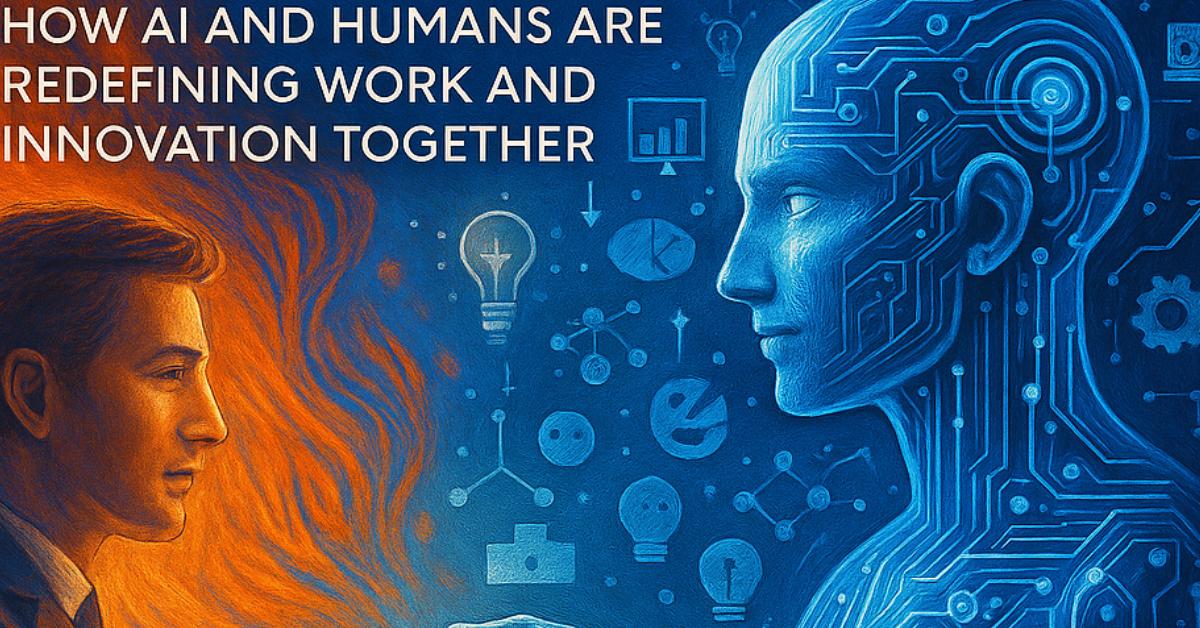




The Collaborative Journey: How AI and Humans are Shaping the Future of Work and Innovation
The landscape of work and innovation is undergoing a seismic shift, driven by the rapid advancement of artificial intelligence (AI). As AI becomes increasingly integrated into various sectors, it is not merely a tool that replaces human labor; rather, it is evolving into a collaborative partner that enhances human capabilities. This article delves into the intricate dynamics of human-AI collaboration, focusing specifically on the impact on job roles and required skills. By examining how this partnership is reshaping the workforce, we can glean insights into the future of work and the skills that will be paramount in an AI-augmented world.
Rethinking Job Roles in the Age of AI
As AI technologies proliferate, traditional job roles are undergoing transformation. Many positions that once relied on routine tasks are now being automated, leading to a redefinition of responsibilities. For instance, in sectors such as manufacturing and data entry, AI systems can perform repetitive tasks with greater efficiency and accuracy than humans. This shift necessitates a reevaluation of job descriptions, emphasizing the need for roles that complement AI capabilities rather than compete with them.
Conversely, new job roles are emerging that focus on managing, interpreting, and enhancing AI systems. Positions such as AI trainers, data ethicists, and machine learning engineers are becoming increasingly vital. These roles require a unique blend of technical proficiency and soft skills, such as critical thinking and creativity. The ability to work alongside AI systems is becoming a sought-after skill, as organizations recognize that human intuition and emotional intelligence cannot be easily replicated by machines.
Moreover, the collaboration between humans and AI is fostering a culture of continuous learning. Employees are encouraged to upskill and adapt to the changing technological landscape. This need for lifelong learning is reshaping educational paradigms, with institutions increasingly focusing on teaching skills that promote human-AI collaboration. As the workforce evolves, so too must the educational frameworks that support it.
The Skills of Tomorrow: Emphasizing Human-AI Collaboration
The integration of AI into the workplace is not solely about technology; it is also about the skills that employees bring to the table. While technical skills related to AI and data analysis are essential, soft skills are equally critical in fostering effective collaboration. Communication, empathy, and teamwork are becoming indispensable as humans and AI work together to solve complex problems.
For instance, in healthcare, AI can analyze vast amounts of patient data to identify trends and predict outcomes. However, it is the human healthcare provider who interprets these insights, engages with patients, and makes nuanced decisions based on individual circumstances. The collaboration between AI’s analytical prowess and human empathy enhances patient care and outcomes. This model can be applied across various industries, where human judgment complements AI’s data-driven insights.
Furthermore, creativity is emerging as a key differentiator in the AI-augmented workplace. While AI can generate content, identify patterns, and suggest solutions, it lacks the ability to think creatively in the same way that humans do. Thus, roles that require innovation, such as product design and marketing strategy, will continue to thrive. The synergy between human creativity and AI’s analytical capabilities can lead to groundbreaking innovations, setting the stage for a new era of productivity.
Ethical Considerations in Human-AI Collaboration
As we embrace the collaborative potential of AI, ethical considerations must remain at the forefront of this journey. The deployment of AI systems raises questions about transparency, accountability, and bias. When humans and AI collaborate, it is essential to ensure that the systems in place are fair and equitable.
One significant concern is the potential for algorithmic bias, which can perpetuate existing inequalities. If AI systems are trained on biased data, they may produce skewed results that adversely affect marginalized communities. Therefore, organizations must prioritize ethical AI development, involving diverse teams in the design and implementation of AI systems. This inclusivity helps to mitigate bias and fosters trust in AI technologies.
Moreover, transparency in AI decision-making processes is crucial. Stakeholders need to understand how AI systems arrive at their conclusions, particularly in high-stakes areas such as finance, healthcare, and criminal justice. By promoting transparency, organizations can enhance accountability and ensure that human oversight remains integral to AI operations.
Finally, as AI takes on more decision-making roles, the question of accountability arises. When an AI system makes a mistake, who is responsible? Organizations must establish clear guidelines for accountability in human-AI collaboration to navigate the ethical complexities of this partnership.
Conclusion
The collaborative journey between humans and AI is reshaping the future of work and innovation in profound ways. As job roles evolve and new skills emerge, the emphasis on human-AI collaboration will be paramount. By fostering a culture of continuous learning and ethical practices, organizations can harness the full potential of AI while ensuring that human values remain central to the process.
In a world where technology and humanity intersect, the future of work is not about competition but rather about collaboration. By embracing this partnership, we can pave the way for a more innovative, productive, and equitable workforce.