
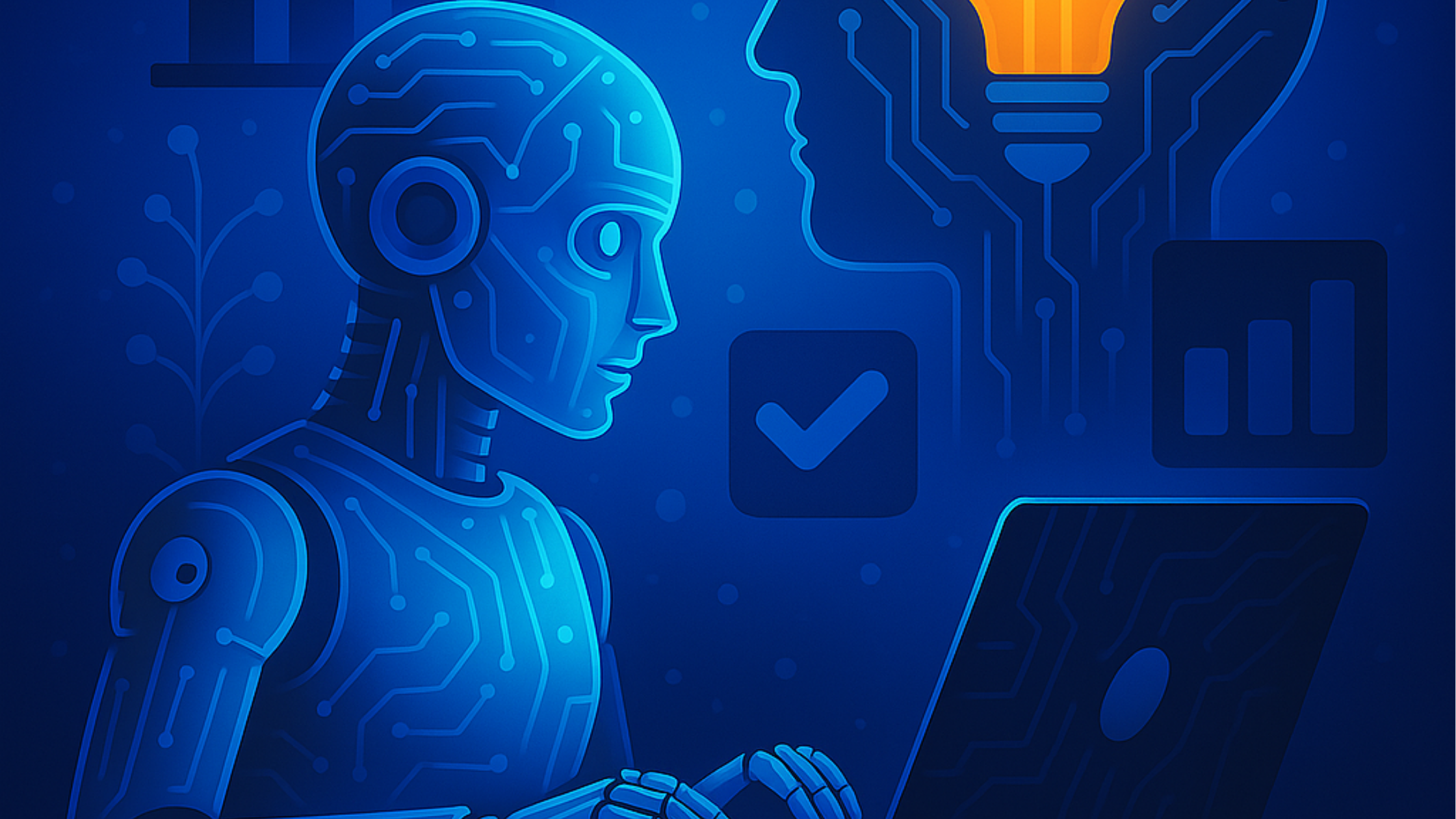
The Game-Changing Role of AI in Modern Productivity Strategies
In the evolving landscape of modern workplaces, the conversation around artificial intelligence (AI) often centers on automation—streamlining processes to reduce human intervention. However, a more nuanced perspective is emerging: the augmentation of human capabilities. Rather than merely replacing tasks, AI can enhance our abilities, leading to improved creativity, efficiency, and productivity. This article delves into how AI can serve as a powerful ally in various professional domains, focusing specifically on the augmentation of human potential rather than just automation.
AI in Scientific Research: Enhancing Discovery
The realm of scientific research is a prime example of how AI can augment human efforts. Traditionally, researchers have spent countless hours sifting through vast amounts of literature to identify relevant studies, trends, and gaps in knowledge. AI tools equipped with natural language processing (NLP) capabilities can revolutionize this process. For instance, AI algorithms can analyze thousands of research papers in minutes, extracting key insights and suggesting areas for further exploration.
Imagine a biochemist working on drug discovery. By utilizing AI-powered tools, researchers can quickly identify potential compounds by analyzing molecular structures and predicting their interactions with biological targets. This not only accelerates the research timeline but also allows scientists to focus their expertise on interpreting results and designing experiments. The synergy between human intuition and AI analysis leads to more innovative hypotheses and, ultimately, groundbreaking discoveries.
Moreover, AI can facilitate collaboration among researchers. Platforms that leverage AI can connect scientists with complementary expertise, fostering interdisciplinary teamwork. This connectivity not only enhances productivity but also enriches the creative process, as diverse perspectives often lead to novel solutions.
AI as a Brainstorming Partner for Creatives
In the creative industries, where innovation is paramount, AI is emerging as a collaborative partner rather than a competitor. Tools like OpenAI’s ChatGPT and other generative models can assist writers, designers, and artists in brainstorming ideas, generating content, and refining concepts. For instance, a marketing team tasked with developing a new campaign can use AI to generate a plethora of slogan options, visual concepts, or even full-fledged advertisements based on initial input.
The real magic happens when creatives leverage AI to push their boundaries. By providing suggestions that might not have been considered, AI can inspire artists to explore new styles or themes. A graphic designer might input a few keywords and receive a range of visual interpretations, sparking ideas that lead to a unique final product. This collaborative dynamic between human creativity and AI-generated insights fosters an environment where experimentation thrives.
Additionally, AI can analyze audience preferences and trends, providing creatives with data-driven insights that inform their work. By understanding what resonates with audiences, artists can tailor their projects to meet market demands while still maintaining their unique voice. In this way, AI augments the creative process rather than stifling it, enabling creators to produce work that is both innovative and relevant.
AI for Complex Problem-Solving: A New Approach to Decision-Making
In many industries, complex problem-solving is a critical skill that demands a combination of analytical thinking and creativity. AI tools designed for decision-making can significantly enhance this process. By utilizing machine learning algorithms, organizations can analyze vast datasets to identify patterns and predict outcomes, thereby informing strategic decisions.
Consider a logistics company facing challenges in supply chain management. AI can analyze historical data, weather patterns, and market trends to forecast demand and optimize inventory levels. This predictive capability allows human decision-makers to focus on strategy and execution rather than getting bogged down in data analysis. The result is a more agile organization that can adapt to changing circumstances swiftly.
Moreover, AI can facilitate scenario planning, enabling teams to explore various outcomes based on different variables. This capability empowers leaders to make informed decisions that consider multiple perspectives and potential consequences. In this context, AI serves as a sophisticated analytical partner, augmenting human judgment rather than replacing it.
The Synergistic Potential of AI and Human Intelligence
The examples of AI’s role in scientific research, creative brainstorming, and complex problem-solving illustrate a broader trend: the synergistic potential of AI and human intelligence. As we move forward, organizations must recognize that the true power of AI lies not in its ability to replace human workers but in its capacity to enhance their skills and capabilities.
By embracing a mindset of augmentation, businesses can cultivate a culture that values collaboration between humans and machines. This shift requires training and upskilling employees to work alongside AI tools effectively. Organizations that prioritize this integration will likely see increased innovation, improved efficiency, and a more engaged workforce.
Moreover, as AI continues to evolve, its role in augmenting human productivity will expand. Industries that adopt this forward-thinking approach will not only thrive in the face of technological advancements but will also pave the way for a future where human creativity and AI efficiency coexist harmoniously.
In conclusion, the conversation around AI in the workplace must shift from one of fear and apprehension to one of collaboration and enhancement. By focusing on how AI can augment human capabilities, organizations can unlock unprecedented levels of productivity and creativity. The future of work lies in the synergy between human intelligence and artificial intelligence, creating a landscape where innovation flourishes, and every individual has the opportunity to contribute their best work. Embracing this partnership will be key to navigating the complexities of the modern workplace and achieving lasting success.