

Multimodal AI: The Next Frontier in Integrating Vision, Language, and Sound for Intelligent Systems
In the rapidly evolving landscape of artificial intelligence (AI), the concept of multimodal AI is emerging as a transformative force. By integrating multiple forms of data—such as text, images, audio, and even video—multimodal AI systems can achieve a more nuanced understanding of the world, mimicking human-like comprehension. This article delves into the intricacies of multimodal AI, exploring its significance, technical challenges, and future implications, particularly in fields like robotics and human-computer interaction (HCI).
Understanding Multimodal AI
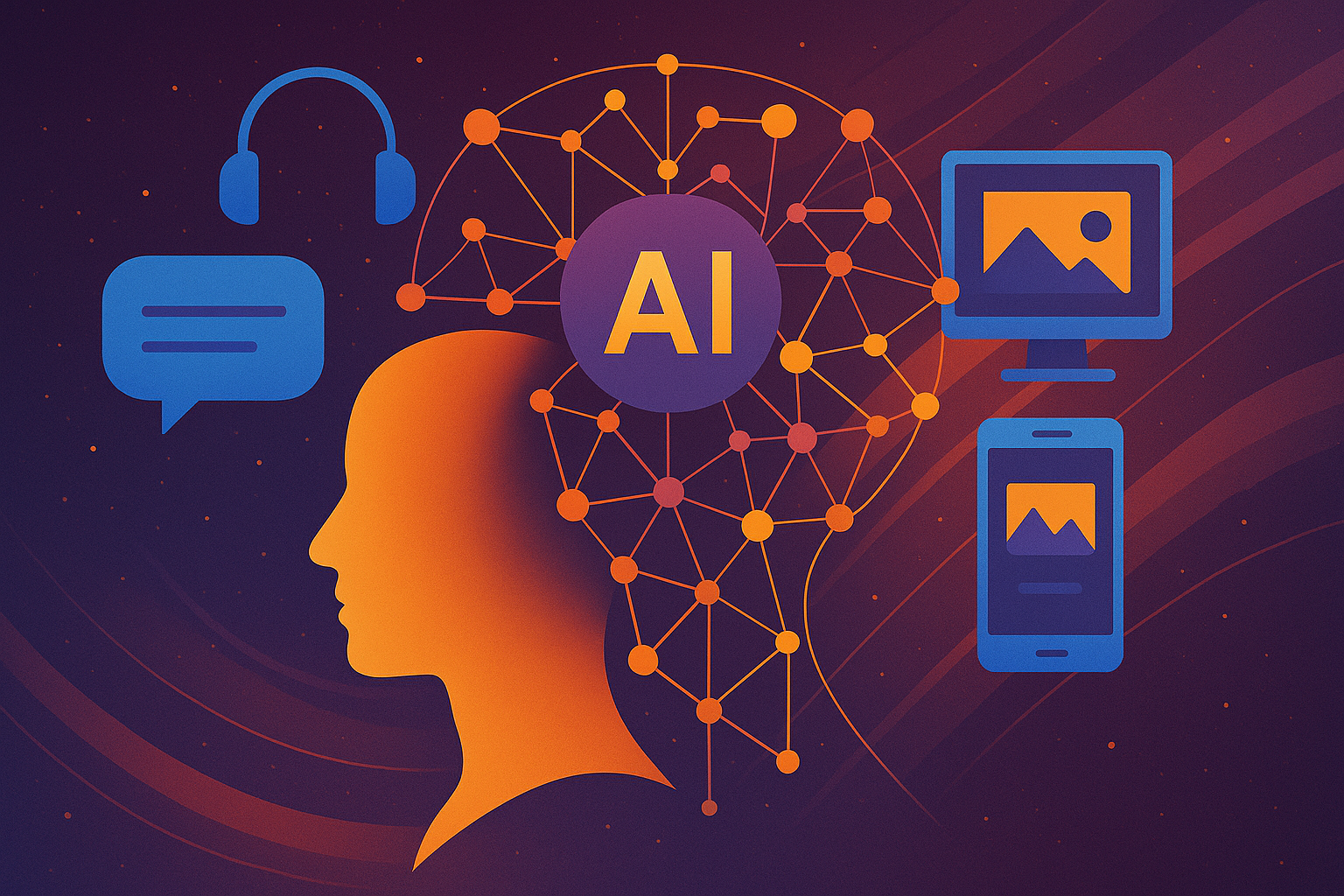
Multimodal AI refers to systems designed to process and analyze data from various modalities. Unlike traditional AI models that focus on a single type of input (e.g., text or images), multimodal AI combines different data types to produce richer insights and more versatile applications. For instance, a multimodal system might analyze a video clip by interpreting both the visual content and accompanying audio, providing a comprehensive understanding of the scene.
The Importance of Multimodal AI
The significance of multimodal AI lies in its ability to create more intelligent and adaptable systems. This capability has far-reaching implications across various sectors, including healthcare, entertainment, and education. By leveraging the strengths of different modalities, these systems can enhance user experiences, improve decision-making processes, and enable more sophisticated interactions between humans and machines.
Technical Challenges of Fusing Modalities
While the potential of multimodal AI is immense, the technical challenges associated with fusing different modalities cannot be overlooked. Integrating data types like vision, language, and sound requires careful consideration of several factors.
Data Alignment and Representation
One of the primary challenges in multimodal AI is aligning data from different sources. For example, when processing a video, the system must synchronize the visual frames with the audio track and any associated text (e.g., subtitles). This requires sophisticated algorithms that can accurately represent and map the relationships between these modalities. Techniques such as attention mechanisms and cross-modal embeddings are often employed to address this issue, allowing models to focus on relevant parts of the data while maintaining context.
Model Complexity and Training
Another hurdle is the complexity of designing and training models capable of handling multiple modalities. Multimodal models often require more extensive datasets and longer training times compared to unimodal counterparts. Moreover, the architecture must be flexible enough to accommodate the unique characteristics of each modality. For instance, while images may require convolutional neural networks (CNNs) for processing, text inputs might be better suited for recurrent neural networks (RNNs) or transformers. Balancing these requirements in a unified model poses a significant challenge for researchers and developers.
Leading Multimodal Architectures
Several multimodal architectures have gained prominence in recent years, each contributing unique approaches to the integration of different data types. Two notable examples are CLIP (Contrastive Language–Image Pre-training) and DALL-E.
CLIP: Bridging Text and Images
Developed by OpenAI, CLIP is designed to understand images and text in a unified framework. By training on a vast dataset of images paired with textual descriptions, CLIP can perform tasks such as zero-shot classification, where it can identify objects in images without explicit training on those specific categories. The model utilizes contrastive learning to align image and text representations, allowing it to generate meaningful associations between the two modalities. This capability has significant implications for applications like content moderation, image search, and even creative arts.
DALL-E: Creativity at the Intersection of Vision and Language
Also from OpenAI, DALL-E takes a different approach by generating images from textual descriptions. This model showcases the potential of multimodal AI to create entirely new content, blurring the lines between human creativity and machine-generated art. DALL-E employs a transformer-based architecture that processes text prompts to produce corresponding images, demonstrating an impressive grasp of visual concepts and artistic styles. Its applications range from graphic design to educational tools, where it can help visualize complex ideas.
Future Potential in Robotics and Human-Computer Interaction
The future of multimodal AI is particularly promising in the realms of robotics and human-computer interaction (HCI). As these systems become more adept at understanding and integrating various forms of input, their ability to interact with humans and navigate the physical world will improve dramatically.
Robotics: Enhancing Autonomy and Interaction
In robotics, multimodal AI can enable machines to perceive their environment more effectively. For instance, a robot equipped with visual, auditory, and tactile sensors can better understand tasks that require nuanced interactions, such as assisting elderly individuals or performing complex assembly tasks. By combining inputs from different modalities, robots can achieve a higher level of autonomy, making them more capable and reliable in real-world applications.
HCI: Creating More Natural Interactions
In the field of HCI, multimodal AI holds the potential to revolutionize how users interact with technology. Imagine a virtual assistant that can not only respond to voice commands but also interpret gestures and facial expressions. Such a system could provide a more intuitive and engaging user experience, adapting to individual preferences and communication styles. This evolution could lead to more effective educational tools, enhanced accessibility for individuals with disabilities, and innovative entertainment experiences.
Conclusion:
Multimodal AI represents a significant leap forward in the quest for intelligent systems that can understand and interact with the world in a human-like manner. By effectively integrating vision, language, and sound, these systems can unlock new possibilities across various domains. While challenges remain in data alignment, model complexity, and training, the advancements in architectures like CLIP and DALL-E illustrate the potential for transformative applications. As we look to the future, the integration of multimodal AI in robotics and HCI promises to reshape our interactions with technology, leading to a more intelligent and responsive world.