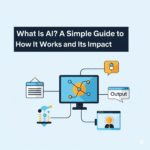




Exploring Multimodal AI: How Integrated Technologies are Shaping the Future of Intelligent Solutions
In recent years, artificial intelligence has evolved dramatically, moving beyond single-modal systems that rely solely on text, images, or audio. Enter multimodal AI, a groundbreaking approach that combines various forms of data to create more sophisticated and human-like interactions. This article delves into the intricacies of multimodal AI, its significance, the technical challenges involved in fusing different modalities, and its potential applications in fields like robotics and human-computer interaction (HCI).
What is Multimodal AI?
Multimodal AI refers to the ability of artificial intelligence systems to process and analyze data from multiple sources—text, images, audio, and even video—simultaneously. This integration allows AI to understand context and nuances more effectively than single-modal systems. For instance, a multimodal AI can analyze a video by interpreting the visual elements, understanding spoken language, and recognizing background sounds all at once.
The importance of multimodal AI lies in its capacity to mimic human perception and cognition. Humans naturally integrate various sensory inputs to form a comprehensive understanding of their environment. By mirroring this process, multimodal AI can enhance applications in various domains, including healthcare, education, and entertainment.
The Technical Challenges of Fusing Modalities
While the promise of multimodal AI is exciting, it comes with its own set of challenges. Integrating different data types requires sophisticated algorithms and architectures capable of understanding the unique characteristics of each modality.
Data Alignment and Synchronization
One of the primary challenges in multimodal AI is ensuring that data from different modalities is aligned and synchronized. For example, when analyzing a video, the system must accurately match the audio track with the corresponding visual frames. Misalignment can lead to misunderstandings, resulting in incorrect interpretations. Techniques such as cross-modal attention mechanisms are being developed to address these issues, allowing models to focus on relevant parts of each modality during processing.
Feature Extraction and Representation
Different modalities have distinct feature representations. Text is often represented through embeddings, while images are processed through pixel values and convolutional layers. The challenge lies in creating a unified representation that captures the essential features of each modality. Advanced architectures like CLIP (Contrastive Language-Image Pre-training) and DALL-E utilize innovative techniques to bridge this gap. CLIP, for instance, learns to connect images and text through a shared embedding space allowing it to understand and generate content across both modalities.
Scalability and Computational Requirements
Another technical hurdle is the scalability of multimodal models. As the number of modalities increases, the computational requirements grow exponentially. Training multimodal models demands significant resources, which can be a barrier for smaller organizations or researchers. Efficient model architectures and optimization techniques are crucial for making multimodal AI accessible and practical for broader applications.
Leading Multimodal Architectures: A Comparative Analysis
Several multimodal architectures have emerged as frontrunners in this domain, each bringing unique strengths and capabilities.
- CLIP
Developed by OpenAI, CLIP leverages a contrastive learning approach to connect images and text. It is trained on vast datasets, enabling it to understand the context of images in relation to descriptive text. The architecture allows for zero-shot learning, meaning it can perform tasks it has never explicitly trained on by leveraging its understanding of both modalities. This flexibility makes CLIP a powerful tool for a wide range of applications, from content moderation to creative design.
- DALL-E
Also from OpenAI, DALL-E takes multimodal AI a step further by generating images from textual descriptions. This model demonstrates the potential for creative applications, allowing users to generate unique visuals based on natural language prompts. DALL-E showcases how multimodal AI can not only understand but also create, opening the door to innovative artistic and design processes.
- Other Notable Models
Beyond CLIP and DALL-E, other models like Flamingo from DeepMind and VisualBERT have also made significant contributions to the field. Flamingo focuses on few-shot learning across modalities, while VisualBERT integrates visual information into traditional text-based tasks, enhancing performance in natural language understanding.
Future Potential in Robotics and Human-Computer Interaction
The future of multimodal AI is particularly promising in the fields of robotics and human-computer interaction. As robots become more integrated into daily life, the ability to understand and respond to multiple forms of input will be crucial.
Enhancing Robotics
In robotics, multimodal AI can enable machines to interact with humans and their environment more intuitively. For example, a robot equipped with multimodal capabilities could interpret verbal commands while simultaneously recognizing visual cues, such as gestures or facial expressions. This level of understanding would allow for more natural and effective interactions, making robots more useful in contexts like elder care, education, and customer service.
Advancements in HCI
Similarly, in human-computer interaction, multimodal AI can create more engaging and personalized experiences. Imagine virtual assistants that not only respond to voice commands but can also interpret user emotions through facial recognition or tone of voice. This capability would allow for more empathetic and context-aware interactions, transforming the way we engage with technology.
Conclusion
Multimodal AI represents a significant leap forward in the development of intelligent solutions. By integrating various forms of data, these systems can achieve a level of understanding and interaction that closely resembles human cognition. While challenges remain—particularly in data alignment, feature extraction, and computational efficiency—the progress made by leading architectures like CLIP and DALL-E illustrates the immense potential of this technology. As multimodal AI continues to evolve, its applications in robotics and human-computer interaction will undoubtedly shape the future of intelligent solutions, making our interactions with machines more seamless and intuitive.