




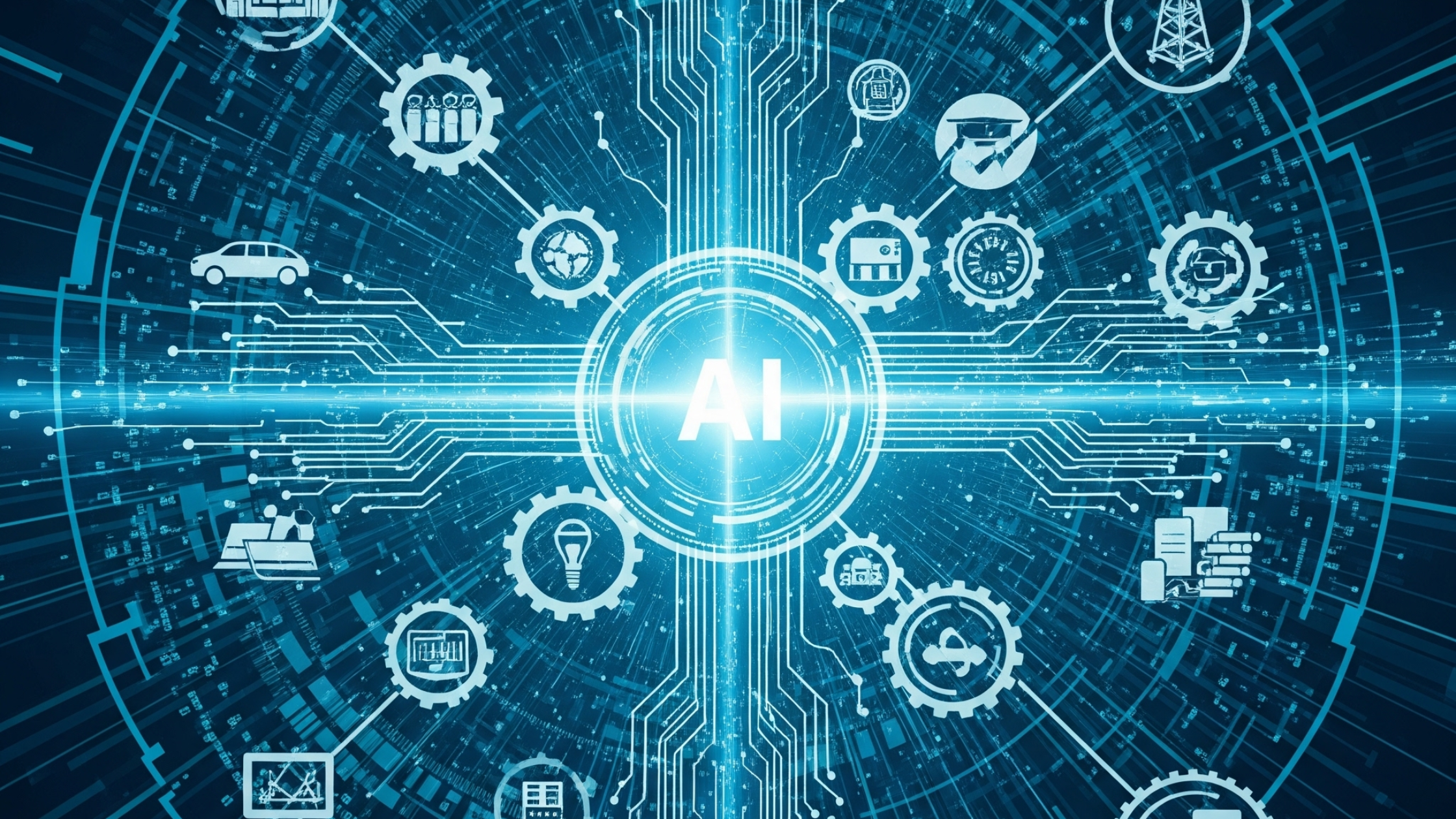
Empowering Industries: How AI Technology is Driving Efficiency and Innovation Across Sectors
Artificial Intelligence (AI) has emerged as a transformative force across various industries, reshaping how businesses operate and innovate. As organizations increasingly seek to harness the power of AI, machine learning (ML) algorithms have become central to this evolution. From healthcare to finance and manufacturing, advancements in ML are driving efficiency, enhancing decision-making, and fostering innovation. This article delves into the intricate world of machine learning algorithms, exploring their impact across sectors and the infrastructure that supports their deployment.
The Evolution of Machine Learning Algorithms
Machine learning, a subset of artificial intelligence, involves the development of algorithms that allow computers to learn from and make predictions based on data. The evolution of ML algorithms has been remarkable, with several key advancements propelling their effectiveness and applicability.
One of the most significant breakthroughs has been the development of deep learning algorithms. These algorithms, inspired by the human brain’s neural networks, have revolutionized fields such as image and speech recognition. For instance, convolutional neural networks (CNNs) have enabled computers to interpret visual data with unprecedented accuracy. As a result, industries like healthcare are leveraging these algorithms to enhance diagnostic processes. Radiologists can now utilize AI-driven image analysis to detect anomalies in medical scans, leading to faster and more accurate diagnoses.
Moreover, the introduction of reinforcement learning has opened new avenues for AI applications. This algorithmic approach allows machines to learn optimal actions through trial and error, making it particularly suitable for dynamic environments. In sectors like logistics and supply chain management, reinforcement learning is optimizing routing and inventory management, resulting in reduced costs and improved service delivery.
Infrastructure: The Backbone of AI Deployment
While advancements in ML algorithms are crucial, the infrastructure that supports AI technology is equally important. The deployment of AI solutions requires robust computational power, large datasets, and efficient storage systems. Cloud computing has emerged as a game-changer in this regard, providing the scalability and flexibility needed for AI applications.
Cloud platforms, such as Google Cloud, Amazon Web Services (AWS), and Microsoft Azure, offer powerful machine learning services that enable organizations to build and deploy AI models without the need for extensive on-premises infrastructure. This accessibility democratizes AI, allowing businesses of all sizes to leverage advanced ML algorithms without significant upfront investment.
Furthermore, the rise of edge computing is enhancing AI’s capabilities, especially in industries where real-time data processing is critical. By processing data closer to the source, edge computing reduces latency and bandwidth usage, enabling applications like autonomous vehicles and smart manufacturing systems to operate more efficiently. This shift is particularly relevant in sectors such as agriculture, where precision farming techniques rely on real-time data analysis to optimize crop yields.
AI Applications Transforming Industries
The impact of AI technology is evident across various sectors, each benefiting from the unique capabilities of machine learning algorithms. Some noteworthy applications include:
1. Healthcare
In the healthcare sector, AI is revolutionizing patient care and operational efficiency. Predictive analytics powered by ML algorithms are being used to anticipate patient needs, optimize treatment plans, and reduce hospital readmission rates. For instance, AI-driven tools can analyze patient history and genetic information to recommend personalized treatment options, significantly improving patient outcomes.
Additionally, AI-powered chatbots are enhancing patient engagement by providing immediate responses to inquiries and scheduling appointments, freeing up healthcare professionals to focus on more complex tasks.
2. Finance
The finance industry is witnessing a transformation in risk assessment and fraud detection through AI technology. Machine learning algorithms can analyze vast amounts of transaction data in real-time, identifying patterns and anomalies that may indicate fraudulent activity. This proactive approach not only enhances security but also reduces losses for financial institutions.
Moreover, robo-advisors, powered by AI, are democratizing investment management by providing personalized financial advice at a fraction of the cost of traditional financial advisors. These algorithms analyze market trends and individual client profiles to recommend tailored investment strategies.
3. Manufacturing
In manufacturing, AI is driving efficiency through predictive maintenance and quality control. Machine learning algorithms can analyze data from sensors embedded in machinery, predicting when equipment is likely to fail and enabling timely maintenance. This proactive approach minimizes downtime and extends the lifespan of equipment, ultimately leading to cost savings.
Furthermore, AI is enhancing quality control processes by utilizing computer vision to inspect products on assembly lines. These algorithms can detect defects with remarkable precision, ensuring that only high-quality products reach consumers.
The Future of AI and Machine Learning
As we look to the future, the potential of AI and machine learning continues to expand. The ongoing development of more sophisticated algorithms, combined with advancements in hardware and data availability, will enable even greater innovation across industries. Ethical considerations regarding AI deployment will also become increasingly important, prompting organizations to adopt responsible practices that prioritize transparency and fairness.
In conclusion, machine learning algorithms are at the forefront of AI technology, driving efficiency and innovation across various sectors. The infrastructure supporting these advancements, coupled with real-world applications, underscores the transformative potential of AI. As industries continue to embrace this technology, the possibilities are boundless, paving the way for a smarter and more efficient future.