



Empowering Collaboration: The Dynamic Partnership Between Humans and Artificial Intelligence
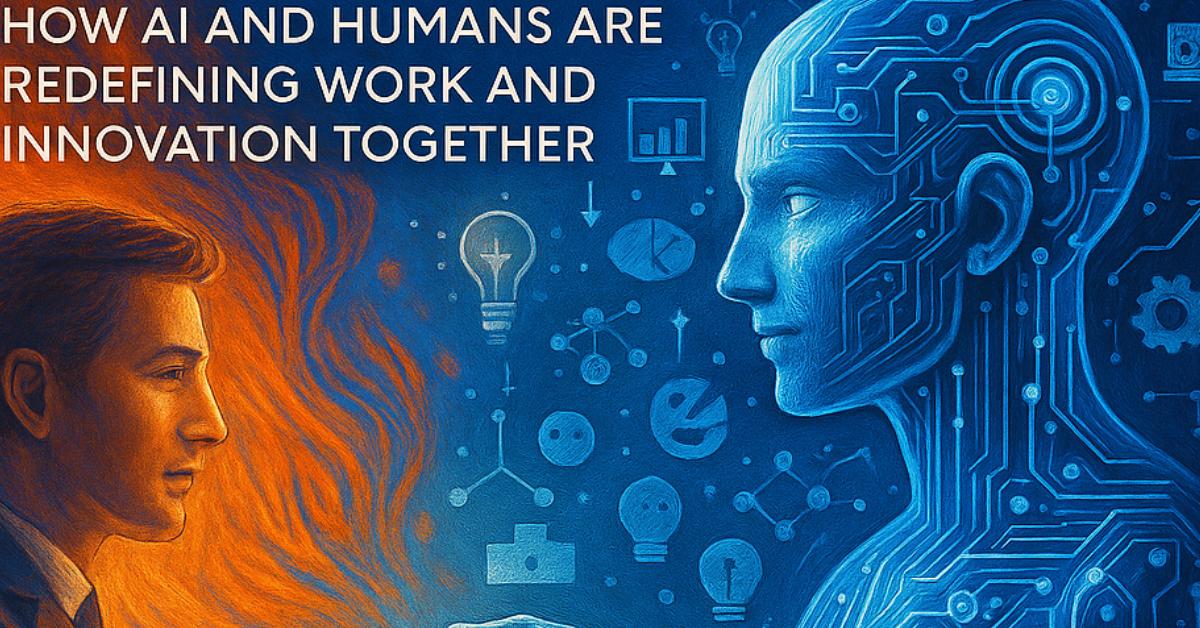
In an era defined by rapid technological advancement, the relationship between humans and artificial intelligence (AI) is evolving into a partnership that promises to reshape industries and redefine job roles. This collaboration is not merely about replacing human labor with machines; rather, it is about augmenting human capabilities and enhancing productivity. By exploring the impact of AI on job roles and skills, we can gain a deeper understanding of how this dynamic partnership can empower individuals and organizations alike.
The Transformation of Job Roles
As AI technologies become more integrated into various sectors, the nature of work is undergoing a seismic shift. Traditional job roles are evolving, with AI taking over repetitive, mundane tasks. For instance, in fields like data entry and analysis, AI algorithms can process vast amounts of data more efficiently than humans. This transformation allows employees to focus on higher-order tasks that require critical thinking, creativity, and emotional intelligence—skills that AI has yet to master.
Moreover, the emergence of AI has led to the creation of entirely new job roles. Positions such as AI trainers, data ethicists, and machine learning engineers are becoming increasingly vital as organizations seek to harness the full potential of AI technologies. These roles require a blend of technical expertise and soft skills, emphasizing the importance of continuous learning and adaptability in the workforce. In this context, the partnership between humans and AI is not just about coexistence; it is about co-evolution, where both entities learn from and enhance one another.
Skills for the Future: Embracing Lifelong Learning
The integration of AI into the workplace necessitates a shift in the skills that employees must possess. While technical skills related to AI and data science are essential, soft skills are equally crucial. Communication, collaboration, and problem-solving abilities are becoming more valuable as workers engage with AI systems. The ability to interpret AI-generated insights and make informed decisions based on those insights is a skill that will set successful employees apart.
Organizations must prioritize reskilling and upskilling initiatives to prepare their workforce for this new landscape. By fostering a culture of lifelong learning, companies can empower employees to embrace change and adapt to new technologies. This proactive approach not only benefits individual workers but also enhances overall organizational resilience. In this way, the collaboration between humans and AI can lead to a more agile and innovative workforce.
Ethical Considerations in Human-AI Collaboration
As the partnership between humans and AI deepens, ethical considerations become paramount. Issues related to bias, transparency, and accountability in AI systems must be addressed to ensure that collaboration is equitable and just. For example, if an AI system is trained on biased data, it may perpetuate those biases in its decision-making processes, leading to unfair outcomes. This raises questions about the ethical responsibilities of developers and organizations in creating and deploying AI technologies.
Furthermore, the transparency of AI systems is critical in building trust between humans and machines. Users must understand how AI systems arrive at their conclusions, especially in high-stakes scenarios such as healthcare or criminal justice. Ensuring accountability in AI decision-making processes is essential to prevent harmful consequences and to maintain public trust in these technologies.
Organizations should establish ethical guidelines and frameworks for the development and deployment of AI systems. By prioritizing ethical considerations, companies can foster a collaborative environment where humans and AI work together towards common goals, minimizing risks and maximizing benefits.
Designing Effective Interfaces for Collaboration
The success of human-AI collaboration hinges on the design of interfaces that facilitate seamless interaction between humans and machines. User experience (UX) design plays a crucial role in ensuring that AI systems are intuitive, accessible, and user-friendly. A well-designed interface can enhance the collaboration experience by enabling users to easily understand and interact with AI tools.
For instance, natural language processing (NLP) technologies allow users to communicate with AI systems in a more human-like manner, reducing the learning curve associated with new technologies. Additionally, visualizations that clearly present AI-generated insights can empower users to make data-driven decisions more effectively. By prioritizing user-centric design, organizations can create interfaces that not only enhance productivity but also foster a sense of partnership between humans and AI.
Conclusion
The collaboration between humans and artificial intelligence is a transformative force reshaping the future of work. By understanding the impact on job roles and skills, embracing lifelong learning, addressing ethical considerations, and designing effective interfaces, we can harness the power of this dynamic partnership. As we move forward, it is essential to view AI not as a replacement for human capabilities but as an augmentation that empowers individuals and organizations to achieve greater heights. The journey towards a collaborative future will require commitment, adaptability, and a shared vision for success.