The Intersection of Technology and Imagination: How AI Art is Transforming Modern Visual Storytelling
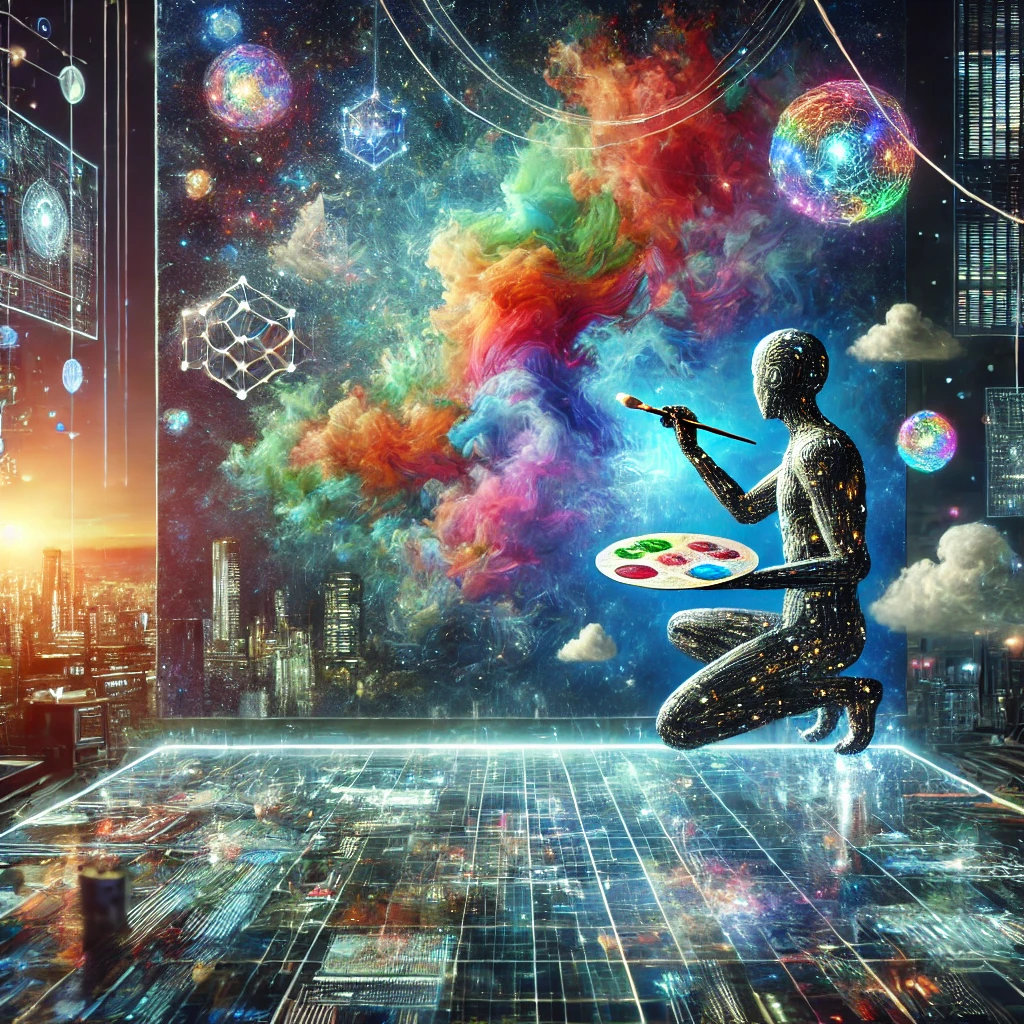
Artificial Intelligence (AI) has become a driving force across industries, and the art world is no exception. AI-generated art is reshaping modern visual storytelling by blending advanced algorithms with human imagination. From platforms like DALL·E, MidJourney, and Artbreeder to conversational LLMs such as ChatGPT and Claude, creators now have tools that democratize art production, spark new ideas, and challenge traditional boundaries of creativity.
Yet, with this rise comes an important discussion: how do fairness, originality, and human involvement fit into a world where machines help make art?
The Evolution of AI Art
AI art represents the meeting point of technology and creativity. By analyzing vast datasets of styles, colors, and artistic techniques, AI models generate visuals that once required years of training to master. This has opened doors for anyone—whether professional artists or hobbyists—to create compelling visuals with just a prompt.
- Advertising & marketing now leverage AI art for campaigns.
- Gaming and entertainment use it for immersive world-building.
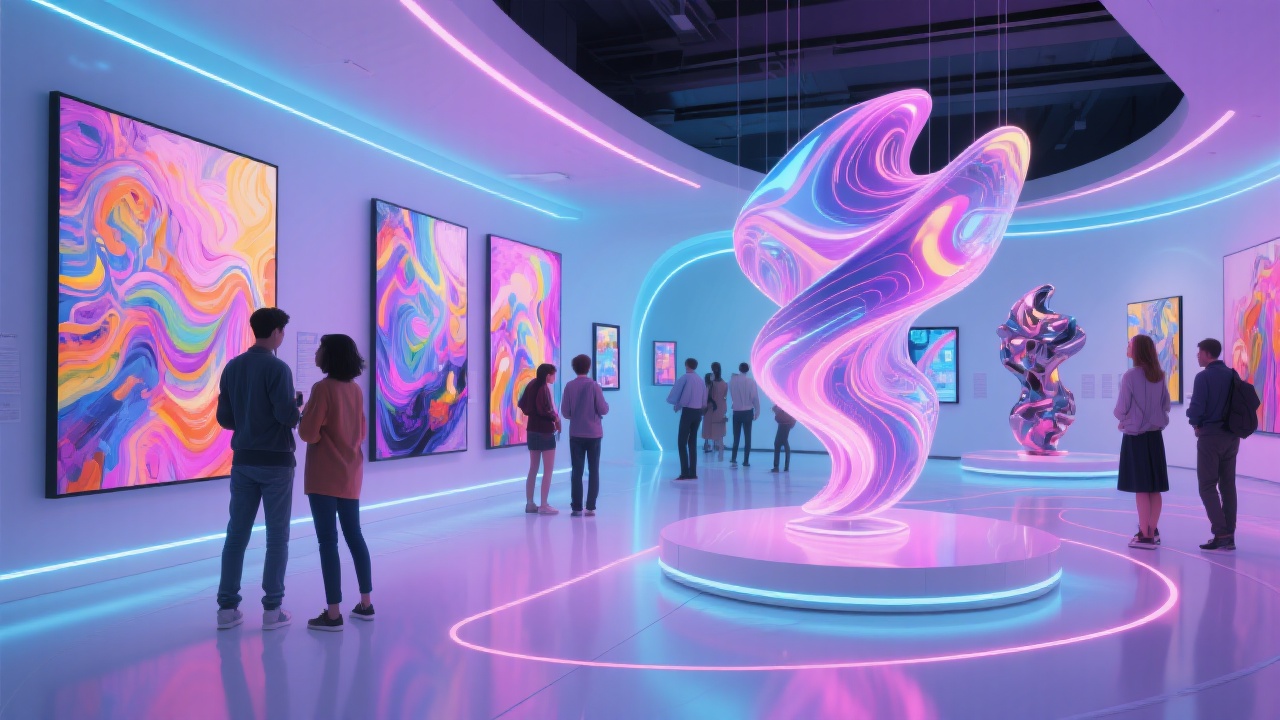
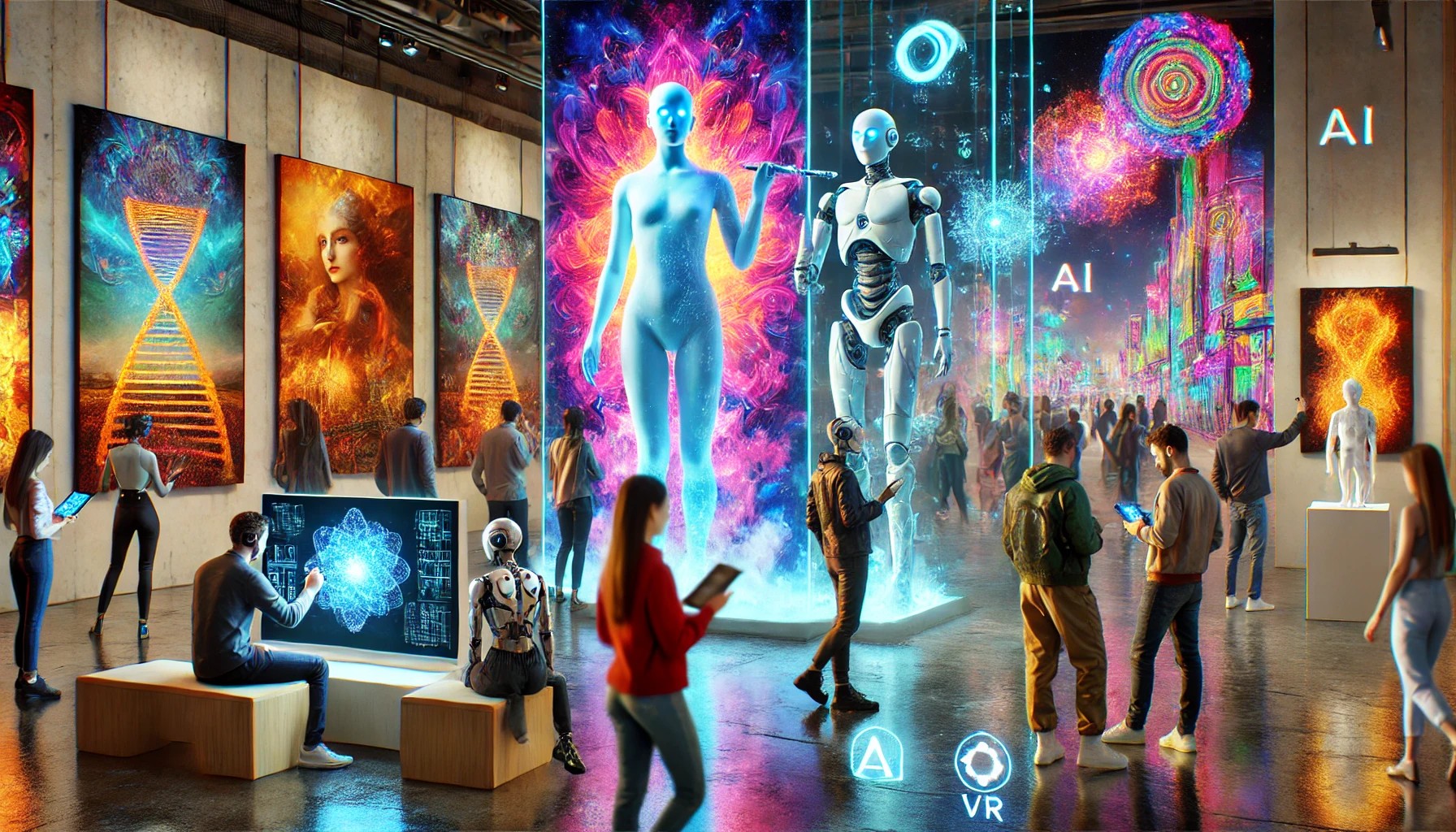
- Fine art sees AI works exhibited in galleries, sparking debates about authorship.
This shift signals not just a new tool, but a redefinition of creativity itself. To explore this shift further, check out our article on the AI Art Revolution.
Ethical Challenges in AI Art Competitions
1. Fairness
Traditional competitions reward human skill, effort, and originality. But with AI generating art in seconds, many wonder: is it fair to compare human hours of work to machine-driven efficiency?
Some contests now require clear disclosure of AI use, ensuring judges evaluate submissions on a balanced scale.
2. Originality
True artistry is tied to uniqueness. But since AI is trained on existing works, its outputs risk echoing familiar styles. This blurs the line between inspiration and imitation.
One way to understand this better is by looking into Generative Adversarial Networks (GANs), which power many of these AI art systems.
To safeguard originality, competitions emphasize creative prompts, unique ideas, and authentic artist involvement.
3. Human Involvement
How much human effort makes AI art truly “art”? Is typing a prompt enough? Many argue that context matters—artists must frame their AI-generated works with a concept, narrative, or vision.
Competitions are increasingly valuing submissions that showcase this synergy between human imagination and AI capability.
The Future of AI in Visual Storytelling
AI art is not here to replace artists—it’s here to expand possibilities. Future collaborations between human creators and AI systems like ChatGPT, Claude, and other LLMs will drive new forms of narrative, pushing the boundaries of what visual storytelling can be.
This connects closely to the rise of Multimodal AI, which combines text, images, and video for richer storytelling. Similarly, innovations in AI-powered workflows and AI writing tools are already transforming creative industries.
However, success will depend on striking the right balance. Ethical guidelines must evolve alongside technology, ensuring fairness, creativity, and human expression remain at the center of art.
Conclusion
The intersection of technology and imagination has given birth to a new era: AI art. While it raises complex ethical debates, it also opens unprecedented creative doors. By valuing fairness, originality, and human contribution, we can build a future where both AI and human artists thrive together in shaping the visual stories of tomorrow.
To see how these trends are influencing wider industries, read our deep dive on AI’s impact on business and society.