
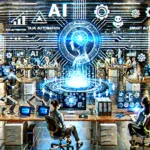

AI-Driven Innovations: Transforming Everyday Life and Shaping the Future of Technology
Artificial Intelligence (AI) has transcended its initial role as a mere technological novelty to become a foundational element of modern society. Its impact is felt across various sectors, influencing how we live, work, and interact with one another. This article delves into the transformative effects of AI-driven innovations on everyday life and explores how these advancements are poised to shape the future of technology.
AI in Daily Life
From the moment we wake up to the time we go to sleep, AI is subtly integrated into our daily routines. Smart home devices, such as voice-activated assistants like Amazon’s Alexa and Google Assistant, have revolutionized how we manage our households. These AI systems learn from user interactions, allowing them to provide personalized responses and recommendations. Consequently, tasks such as setting alarms, controlling lighting, or even ordering groceries have become more efficient and user-friendly.
Moreover, the influence of AI extends into transportation. Autonomous vehicles, powered by sophisticated machine learning algorithms, are no longer a distant dream but are being tested and implemented in various urban environments. Companies like Tesla and Waymo are at the forefront of this revolution. Employing AI to enhance safety and reduce traffic congestion. The potential for AI to streamline public transportation systems further underscores its role in transforming how we navigate our cities.
In healthcare AI’s impact is profound and multifaceted. Medical professionals increasingly rely on AI-driven diagnostic tools that analyze patient data with remarkable accuracy. Algorithms can detect anomalies in medical images, predict disease outbreaks, and even assist in developing personalized treatment plans. As a result, the healthcare industry is not only improving patient outcomes but also enhancing operational efficiency.
AI in Business: Revolutionizing Industries
The business landscape is undergoing a seismic shift due to AI innovations. Organizations are leveraging AI to optimize operations, enhance customer experiences, and drive strategic decision-making. Predictive analytics powered by AI enables companies to anticipate market trends and consumer behavior, allowing them to tailor their offerings more effectively.
Retailers for instance are harnessing AI to refine inventory management and personalize marketing efforts. By analyzing consumer data, AI can recommend products based on individual preferences, leading to increased sales and customer satisfaction. Furthermore chatbots and virtual assistants are transforming customer service, providing instant support and resolving queries around the clock. This level of accessibility not only enhances the customer experience but also frees human agents to focus on more complex issues.
Financial institutions are also reaping the benefits of AI. Fraud detection systems utilize machine learning algorithms to analyze transaction patterns, identifying suspicious activities in real-time. Additionally, robo-advisors are democratizing investment management by offering personalized financial advice based on individual risk profiles and goals. Such advancements are making financial services more accessible and efficient ultimately benefiting consumers.
The manufacturing sector is experiencing a similar transformation. AI-driven automation is streamlining production processes, reducing waste, and increasing output. Predictive maintenance powered by AI can foresee equipment failures before they occur, minimizing downtime and saving costs. As industries continue to adopt these technologies the potential for increased productivity and innovation is immense.
The Future of AI: Ethical Considerations and Challenges
While the benefits of AI-driven innovations are undeniably transformative they also raise important ethical considerations and challenges. As AI systems become more integrated into society, issues related to privacy, bias, and accountability must be addressed. Data privacy concerns are paramount as the collection and analysis of vast amounts of personal information can lead to misuse if not properly regulated.
Bias in AI algorithms is another significant challenge. Machine learning models are trained on historical data, and if that data reflects societal biases the AI will perpetuate those biases in its decision-making processes. Ensuring fairness and transparency in AI systems is crucial for building trust among users and preventing discrimination.
Additionally the rise of AI-driven automation poses questions about the future of work. While AI can enhance productivity, it also has the potential to displace jobs particularly in sectors that rely heavily on routine tasks. Preparing the workforce for this shift is vital as reskilling and upskilling initiatives will be necessary to equip individuals with the skills needed to thrive in an AI-augmented economy.
Despite these challenges, the future of AI holds tremendous promise. Ongoing research and development in AI ethics and governance are essential to ensure that innovations are harnessed responsibly. Collaborative efforts between governments, industry leaders, and academia will be crucial in establishing guidelines that promote ethical AI use while fostering innovation.
In conclusion, AI-driven innovations are reshaping everyday life and redefining the future of technology. From enhancing our daily routines to revolutionizing industries, the transformative power of AI is evident. However, as we embrace these advancements, it’s imperative to navigate the accompanying ethical considerations and challenges thoughtfully.
The journey ahead will require a balanced approach that prioritizes innovation while safeguarding individual rights and societal values. By fostering a collaborative environment where stakeholders work together to address these challenges, we can harness the full potential of AI to create a future that benefits all. As we stand on the brink of this technological revolution, the possibilities are limitless, and the responsibility lies with us to shape a future that is equitable, inclusive, and sustainable.