



Multimodal AI · Interaction · Engagement
Exploring the Multimodal Landscape: How AI is Transforming Interaction and Engagement Across Mediums
A text-forward long read on the basics, applications, challenges, and future of multimodal systems.
What multimodal AI changes
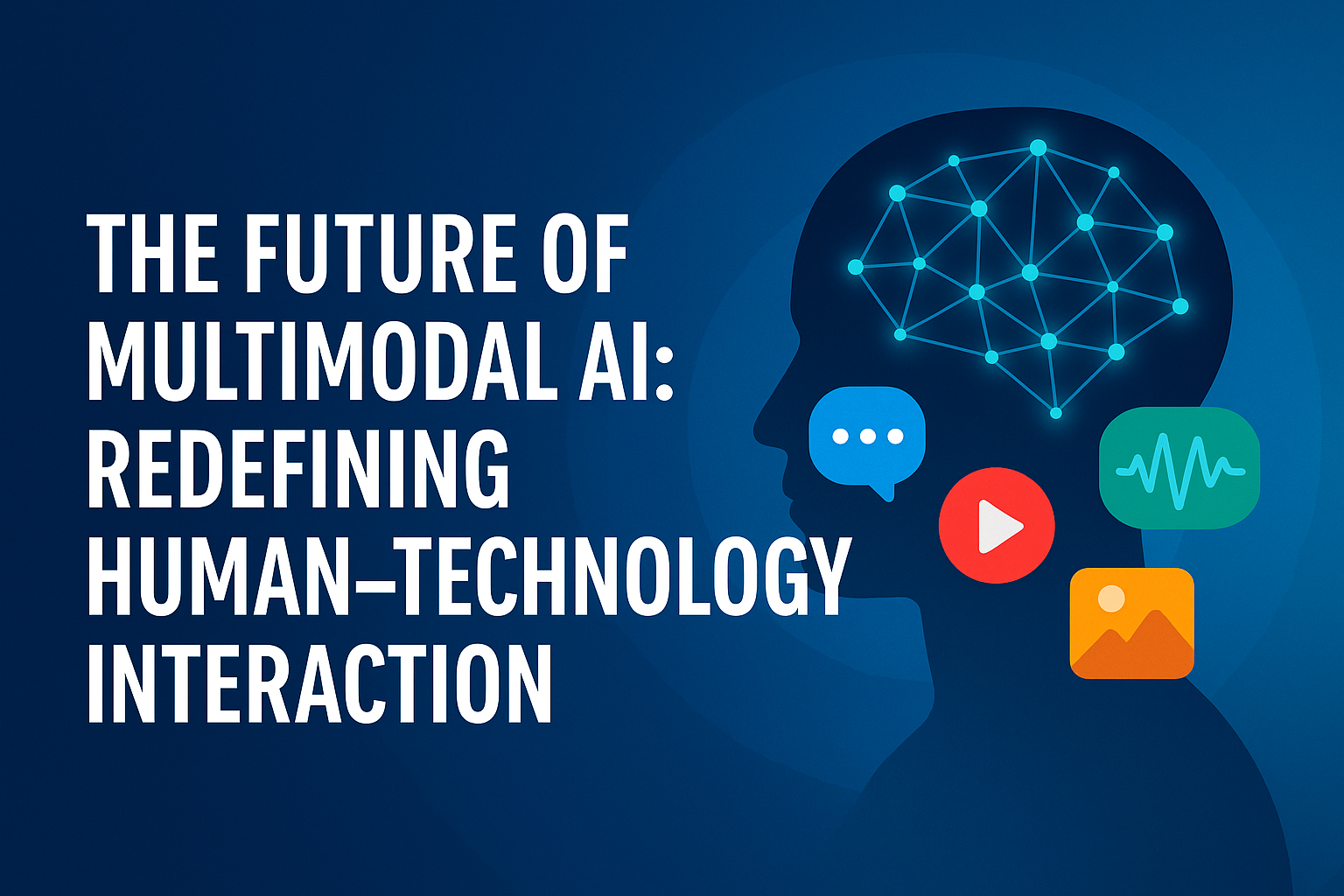
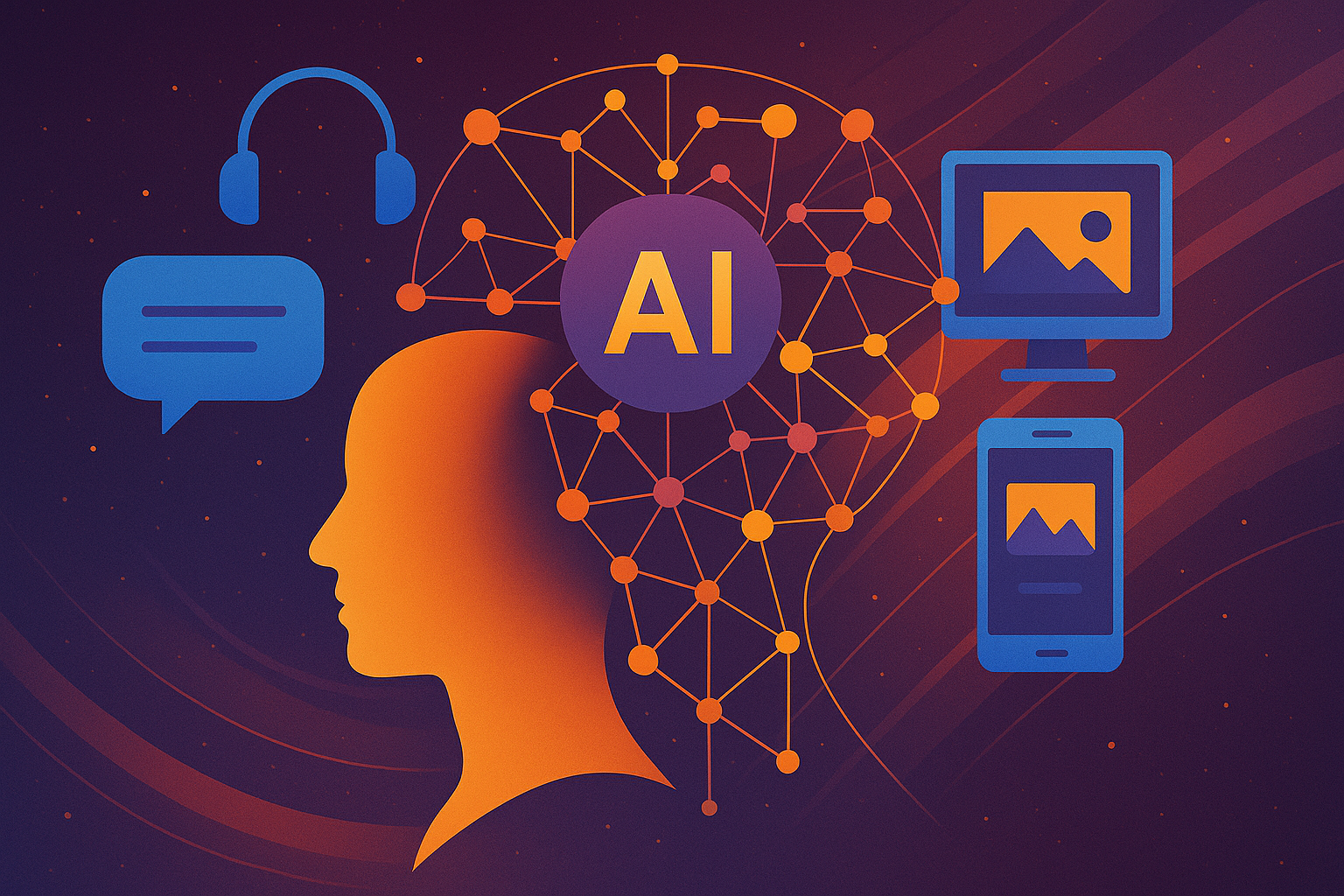
Humans communicate with words, images, gestures, tone, and context. Multimodal AI brings this richness into digital systems by aligning text, images, audio, and video inside a common reasoning space. Interactions feel more intuitive, adaptive, and responsive—reshaping user engagement across products and platforms.
For strategic context, see: Unlocking the Future of Multimodal AI · Integrating Diverse Data · Leveraging Multiple Data Channels.
Core concepts and building blocks
Modality-specific encoders
Vision transformers parse images and video frames; speech models capture phonetics and prosody; language models represent semantics. Each encoder projects inputs into vectors that can be aligned across modalities.
Shared representation space
Contrastive learning (e.g., CLIP-style) co-trains text and image so matching pairs sit close together in the latent space. This alignment enables cross-modal retrieval and conditioning (describe an image; find images matching a caption).
Fusion and reasoning
Early fusion merges signals up front; late fusion combines expert predictions; hybrid schemes use attention to pass information between streams. A reasoning head—often a large language model—uses these fused features to plan, infer, and explain.
Instruction tuning and tool use
Instruction-tuning makes models follow prompts. Tool-use wiring lets the system call OCR, ASR, retrieval, or APIs to ground answers in evidence and act in the world.
Applications shaping engagement
Education
Adaptive tutors mix diagrams, narration, and interactive checks. Models infer misconceptions from speech cadence, eye focus, and scratch work, then adjust explanations in real time.
Healthcare
Assistants triage by combining patient speech, intake forms, prior notes, and images; transcription plus summarization reduces clinician burden while preserving nuance. Guardrails and oversight are essential.
Entertainment & media
Branching experiences respond to voice, gesture, and affect. Content teams prototype scenes faster with AI assistance for storyboards, localization, and accessibility.
Customer experience
Support agents “see” user screenshots, “hear” tone, and “read” logs to resolve issues quickly. AR try-on and visual search shorten paths from intent to purchase.
Key challenges and tradeoffs
Data integration and quality
Modalities differ in sampling rates, noise, and semantics. Aligning them without losing information requires careful preprocessing, synchronization, and robust training objectives.
Latency and cost
Real-time interaction demands sub-second pipelines. Edge preprocessing, compressed features, retrieval narrowing, and streaming outputs keep experiences responsive and economical.
Bias, privacy, and interpretability
Datasets can underrepresent accents, contexts, or demographics. Minimize data collection, support consent/opt-out, add human-in-the-loop review, and document limitations with model cards.
Innovations on the horizon
- On-device multimodal for private, low-latency perception.
- Richer tool-use generating structured outputs (tables, charts, code) grounded in mixed inputs.
- Personalized memory with transparent controls and revocable consent.
- Evaluation standards to benchmark cross-modal reliability and safety.
Explore more perspectives: Unlocking the Future · Integrating Diverse Data · Leveraging Multiple Data Channels.
FAQ
How is multimodal AI different from traditional AI?
Traditional systems process one input type at a time (e.g., text or images). Multimodal AI aligns several inputs—language, vision, audio—so the model can reason across them holistically.
What are the biggest engineering constraints?
Latency and cost. Practical systems combine edge preprocessing, compressed representations, retrieval, and streaming to hit real-time targets while managing compute spend.
How do we mitigate bias and protect privacy?
Audit datasets for coverage, provide consent and opt-out flows, minimize data collection, prefer on-device processing, and keep humans in the loop for sensitive decisions.