



Generative Adversarial Networks: Transforming Data into Realistic Images and New Possibilities
In the world of artificial intelligence and machine learning, few innovations have generated as much excitement and potential as Generative Adversarial Networks (GANs). Introduced by Ian Goodfellow and his colleagues in 2014, GANs have revolutionized the way we approach data generation, particularly in the realm of image synthesis. By leveraging two neural networks—the generator and the discriminator—GANs can create incredibly realistic images from random noise. This technological breakthrough is not just a novelty; it is opening up new possibilities across various fields, including climate science and environmental modeling.
Understanding GANs: The Basics
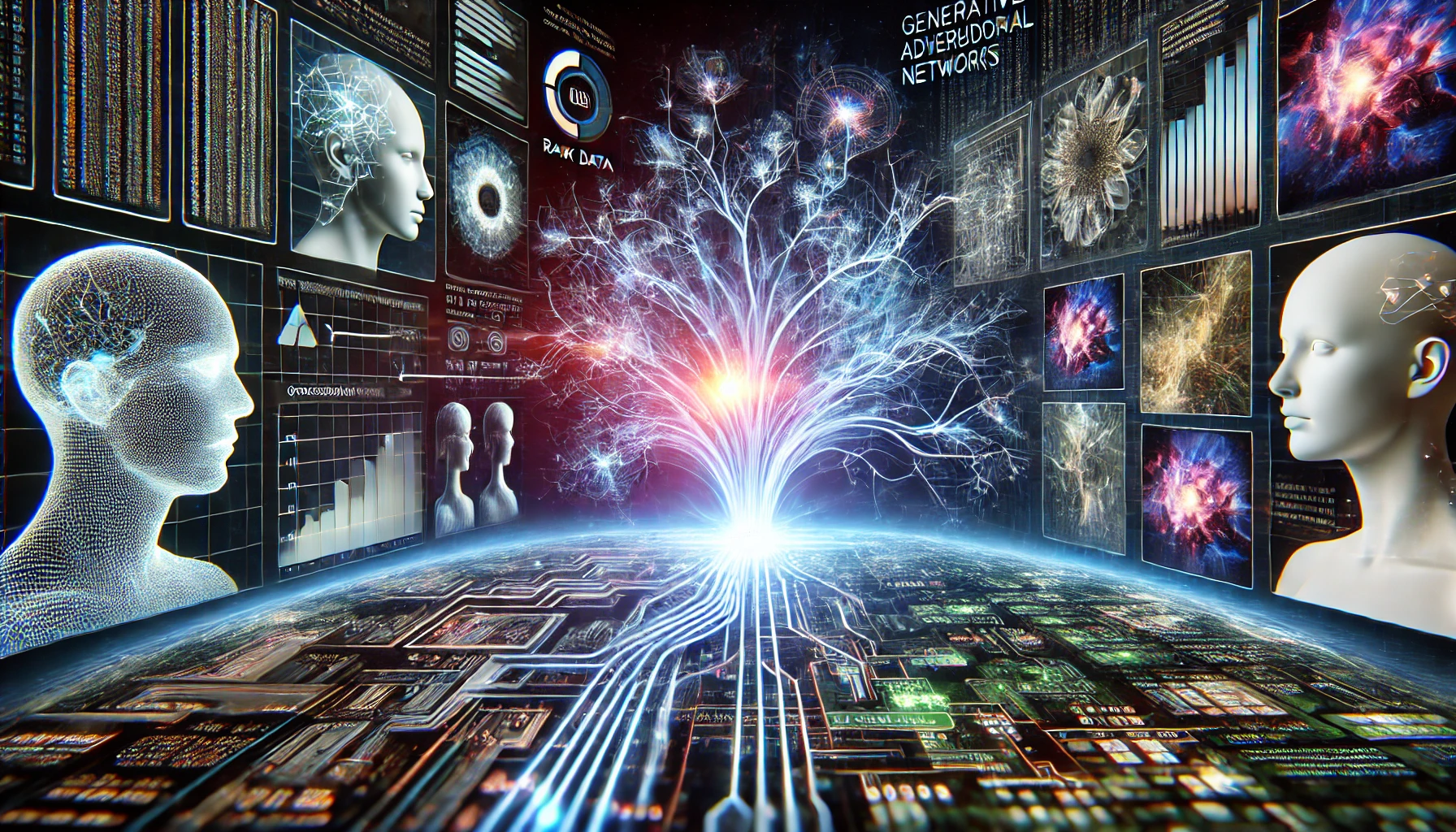
At its core, a GAN consists of two components that work against each other in a game-theoretic framework. The generator’s role is to create synthetic data that mimics real data, while the discriminator’s task is to distinguish between real and synthetic data. The generator starts with random noise and gradually learns to produce images that resemble the training dataset. In contrast, the discriminator becomes increasingly adept at identifying which images are real and which are generated. Over time, this adversarial process leads to the generator producing highly realistic images, effectively transforming data into lifelike representations.
The Role of GANs in Climate Science
Climate science is a complex field that requires the analysis of vast amounts of data to understand and predict environmental changes. Traditional methods of data collection, such as satellite imagery, can be limited by factors such as cloud cover, atmospheric conditions, and the availability of historical data. This is where GANs come into play, offering innovative solutions to overcome these challenges.
Generating Synthetic Satellite Imagery
One of the most promising applications of GANs in climate science is the generation of synthetic satellite imagery. Satellite images are crucial for monitoring climate patterns, land use changes, and natural disasters. However, acquiring high-quality images can be difficult due to cloud cover or other obstructions. GANs can generate synthetic images that fill in the gaps, creating a more complete picture of the Earth’s surface.
For instance, researchers have developed GAN models that can generate cloud-free images from cloudy satellite data. By training on a dataset of paired cloudy and clear images, the GAN learns to infer what the underlying landscape looks like without the cloud cover. This capability not only enhances the quality of satellite imagery but also provides researchers with a more accurate dataset for climate modeling and analysis.
Enhancing Climate Models
In addition to generating synthetic imagery, GANs can be employed to enhance climate models. Traditional climate models rely on historical data to simulate future conditions. However, these models often struggle with uncertainties and limitations in data coverage. GANs can help bridge this gap by generating realistic climate scenarios based on existing data.
For example, researchers can use GANs to simulate various climate conditions, such as temperature variations, precipitation patterns, and extreme weather events. By training the GAN on historical climate data, it can generate plausible future scenarios that scientists can use to test the resilience of ecosystems, urban areas, and agricultural systems under different climate conditions.
Data Augmentation for Improved Predictions
Another significant advantage of GANs in climate science is their ability to augment existing datasets. In many cases, researchers face limited data availability, especially in remote or under-studied regions. GANs can generate additional synthetic data points that maintain the statistical properties of the original dataset. This augmentation can significantly improve the performance of machine learning models used for climate predictions.
For instance, if a researcher is developing a model to predict the impact of climate change on a specific region’s agriculture, they may have limited historical data on crop yields. By using GANs to generate synthetic data that reflects various climate scenarios, the researcher can train a more robust predictive model, leading to better-informed decisions for farmers and policymakers.
The Future of GANs in Environmental Modeling
As GANs continue to evolve, their applications in climate science and environmental modeling are expected to expand further. Researchers are exploring the integration of GANs with other advanced techniques, such as reinforcement learning and transfer learning, to create even more sophisticated models that can adapt to changing environmental conditions.
Addressing Climate Change
Climate change is one of the most pressing challenges of our time, and GANs hold the potential to contribute significantly to our understanding and mitigation of its effects. By generating realistic climate scenarios, scientists can better assess the risks associated with climate change and develop strategies for adaptation and resilience. For instance, urban planners can use GAN-generated data to model the impacts of rising sea levels on coastal cities, allowing them to design more effective flood defense systems.
Biodiversity and Ecosystem Monitoring
In addition to climate modeling, GANs can be utilized for biodiversity and ecosystem monitoring. By generating synthetic images of habitats and species distributions, researchers can gain insights into the effects of climate change on biodiversity. This information is crucial for conservation efforts, as it helps identify vulnerable species and ecosystems that may require protection.
Ethical Considerations and Challenges
While the potential of GANs in climate science is immense, it is essential to address the ethical considerations and challenges associated with their use. The generation of synthetic data raises questions about data integrity, accuracy, and potential misuse. Researchers must ensure that the generated data is used responsibly and transparently, with clear communication about its limitations.
Moreover, the reliance on synthetic data should not replace the need for real-world observations. Real world observations remain crucial to validate the findings derived from models that incorporate GAN-generated data.
Conclusion
Generative Adversarial Networks are transforming the landscape of data generation, offering innovative solutions to complex challenges in climate science and environmental modeling. By generating synthetic satellite imagery, enhancing climate models, and augmenting existing datasets, GANs are providing researchers with powerful tools to better understand and address the impacts of climate change. As we continue to explore the potential of GANs, it is crucial to approach their application with a sense of responsibility and ethical consideration, ensuring that we harness their capabilities for the greater good of our planet and future generations.