




Revolutionizing Industries: The Transformative Impact of AI Technology on Business and Society
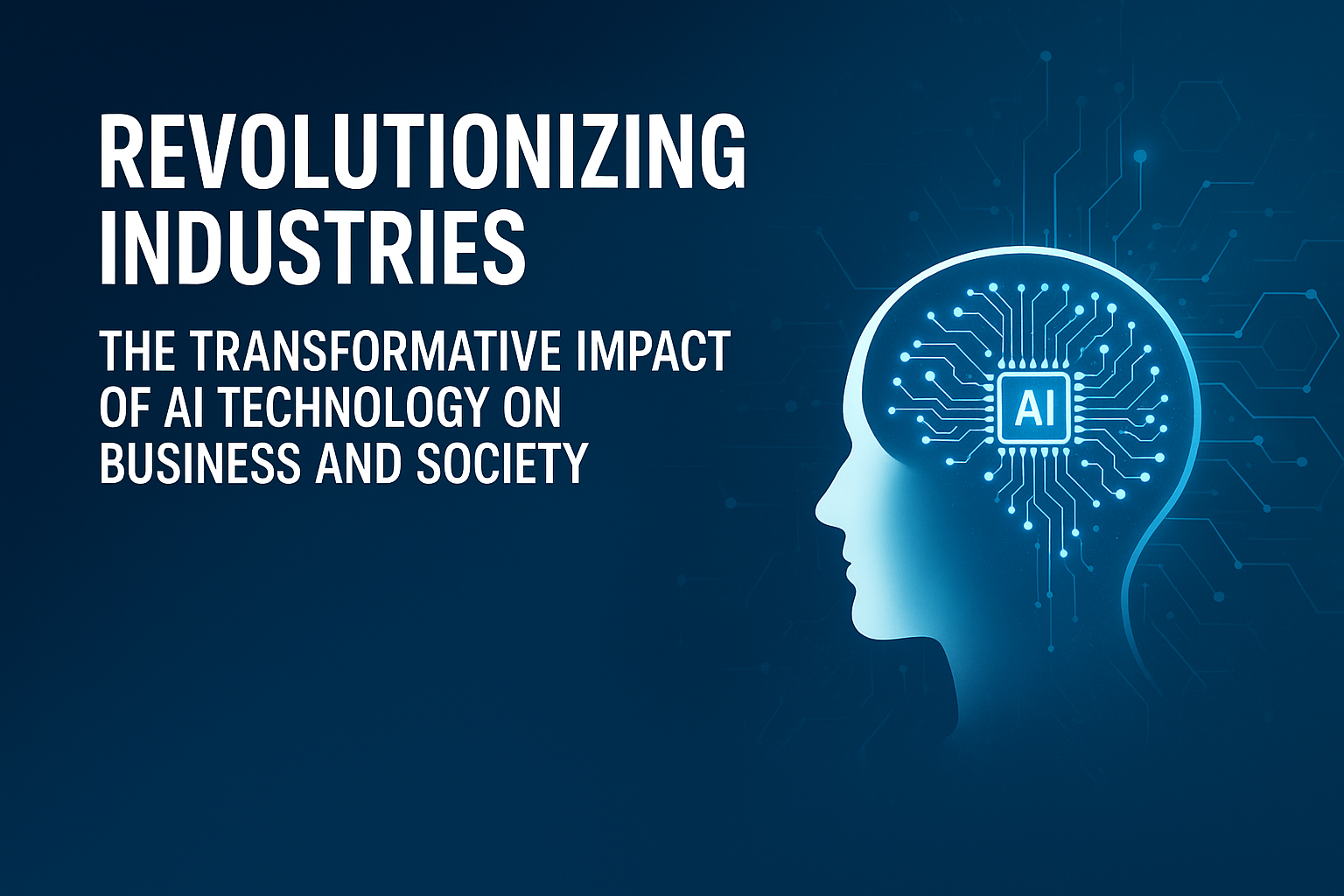
Artificial Intelligence (AI) has rapidly evolved from a concept in science fiction to a transformative force in various sectors, reshaping how businesses operate and how society functions. At the heart of this revolution lies an essential component: specialized hardware designed specifically for AI applications. AI-specific chips, such as Tensor Processing Units (TPUs) and neuromorphic chips, are pivotal in enhancing the efficiency, speed, and capability of AI systems. This article explores the rise of these advanced chips and their profound implications for AI infrastructure, business operations, and societal advancements.
The Rise of AI-Specific Chips
Understanding AI-Specific Chips
AI-specific chips are designed to handle the unique demands of machine learning and data processing tasks. Unlike traditional CPUs (Central Processing Units) that are general-purpose processors, these chips are optimized for parallel processing and high-throughput operations, making them ideal for the heavy computational workloads associated with AI applications.
1. Tensor Processing Units (TPUs): Developed by Google, TPUs are tailored for accelerating machine learning workloads. They are particularly efficient for tasks involving large matrices, which are common in deep learning models. TPUs enable faster training times and lower energy consumption compared to conventional CPUs and GPUs (Graphics Processing Units).
2. Neuromorphic Chips: These chips mimic the architecture and functioning of the human brain. Neuromorphic computing aims to process information in a way that is more akin to biological neural networks, allowing for more efficient learning and decision-making processes. Companies like Intel and IBM are at the forefront of developing neuromorphic chips, which promise to revolutionize how machines learn and adapt.
The Acceleration of AI Development
The emergence of AI-specific chips has significantly accelerated the development of AI technologies. With enhanced processing capabilities, researchers and businesses can train complex models faster and more efficiently. This acceleration leads to rapid iterations in AI research and development, resulting in breakthroughs across various fields, including healthcare, finance, transportation, and more.
For instance, in healthcare, AI models trained on vast datasets can analyze medical images with remarkable accuracy, identifying conditions such as tumors or fractures that might be missed by human eyes. The speed and efficiency afforded by AI-specific chips facilitate the development of these models, ultimately enhancing patient care and outcomes.
Shaping the Future of AI Infrastructure-
Cost Efficiency and Accessibility
As AI-specific chips become more prevalent, the cost of deploying AI solutions is expected to decrease. Traditional AI models often require expensive, high-performance hardware, limiting access to large corporations with substantial budgets. However, with the advent of specialized chips, smaller businesses and startups can harness AI technology without incurring prohibitive costs.
This democratization of AI technology fosters innovation across industries. Startups can develop AI-driven solutions that challenge established players, leading to increased competition and a broader range of services for consumers. The result is a more dynamic market where creativity and innovation thrive.
Enhanced Energy Efficiency
Energy consumption is a critical concern in the deployment of AI technologies. Traditional data centers consume vast amounts of energy, contributing to environmental challenges. AI-specific chips, particularly TPUs and neuromorphic chips, are designed with energy efficiency in mind. They perform computations with lower energy requirements, which not only reduces operational costs but also minimizes the carbon footprint of AI systems.
As businesses increasingly prioritize sustainability, the use of energy-efficient AI infrastructure will play a pivotal role in achieving corporate social responsibility goals. Companies that leverage these advanced chips can position themselves as leaders in sustainability while driving innovation.
Scalability and Flexibility
AI-specific chips offer unparalleled scalability and flexibility, enabling businesses to adapt to changing demands. With the ability to process vast amounts of data in real-time, organizations can scale their AI applications seamlessly as their needs evolve. For instance, in the e-commerce sector, AI-driven recommendation engines can analyze user behavior and preferences to provide personalized shopping experiences on a massive scale.
Moreover, the flexibility of these chips allows for the integration of AI into various applications, from customer service chatbots to autonomous vehicles. As industries continue to embrace digital transformation, the adaptability of AI infrastructure will be a key factor in maintaining competitiveness.
Implications for Business and Society-Transforming Business Operations
The integration of AI-specific chips into business operations is revolutionizing how companies function. From automating repetitive tasks to enhancing decision-making processes, AI is reshaping the workforce landscape. Organizations can leverage AI to analyze data, predict trends, and optimize supply chains, resulting in increased efficiency and profitability.
However, this transformation also raises concerns about job displacement. As AI systems take over routine tasks, the workforce must adapt by acquiring new skills. Upskilling and reskilling initiatives will be essential to ensure that employees remain relevant in an AI-driven economy.
Societal Advancements
The impact of AI-specific chips extends beyond business operations, influencing societal advancements as well. In sectors such as education, AI can provide personalized learning experiences, catering to individual student needs and improving educational outcomes. In public safety, AI-driven surveillance systems can enhance crime prevention efforts while raising ethical considerations regarding privacy.
Moreover, the potential of AI to address global challenges, such as climate change and healthcare disparities, is immense. AI systems can analyze environmental data to develop sustainable solutions or optimize resource allocation in healthcare, ensuring that underserved populations receive the care they need.
Ethical Considerations
As AI technology continues to advance, ethical considerations surrounding its deployment become increasingly critical. Issues such as bias in AI algorithms, data privacy, and accountability must be addressed to ensure that AI serves the greater good. The development of AI-specific chips must be accompanied by a robust ethical framework that prioritizes transparency, fairness, and inclusivity.
Conclusion
The rise of AI-specific chips like TPUs and neuromorphic chips is revolutionizing the landscape of AI technology, shaping the future of AI infrastructure and its applications across industries. As businesses and society harness the power of these advanced chips, they unlock new opportunities for innovation, efficiency, and sustainability. However, it is imperative to navigate the ethical challenges that accompany this transformation to ensure that AI serves as a force for good. The journey toward a more AI-driven future is just beginning, and the possibilities are limitless.